
Last updated November 4, 2026
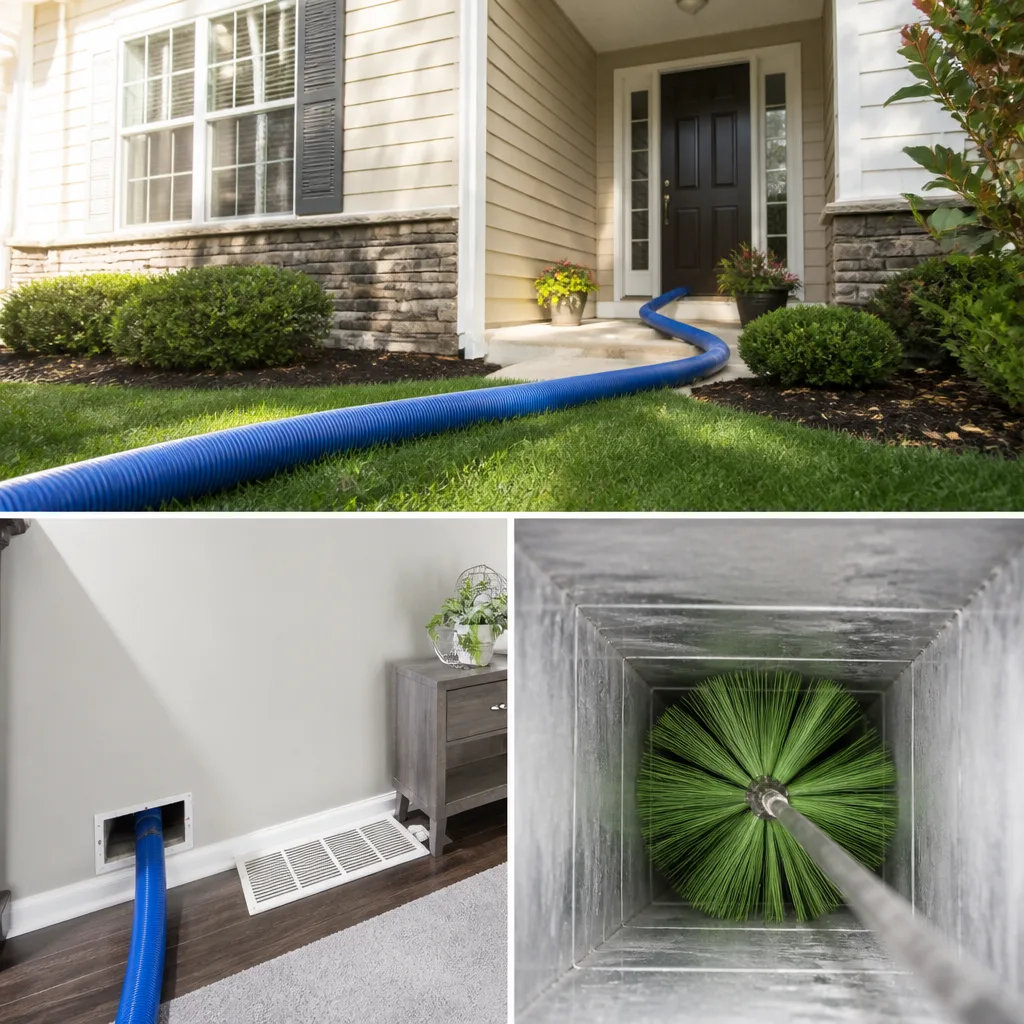 Whole-home duct cleaning
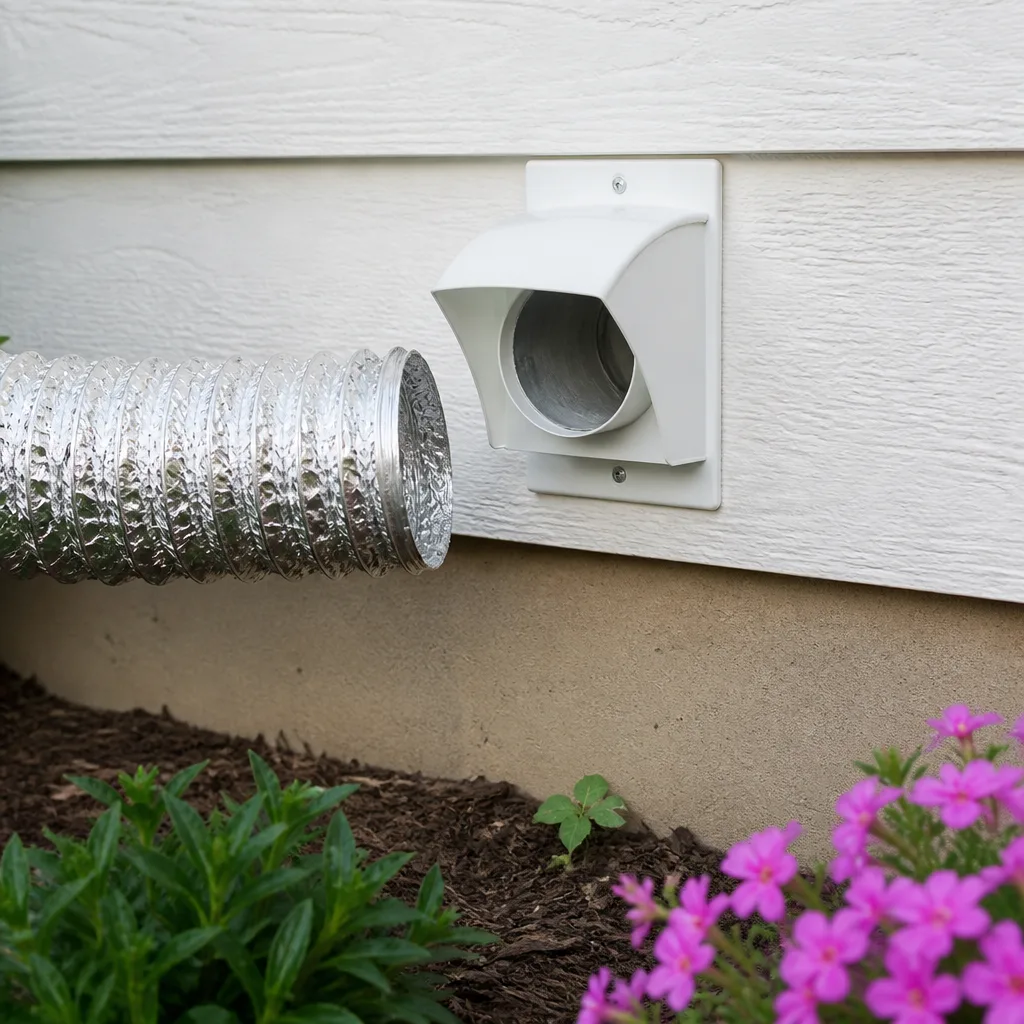 Dryer vent cleaning
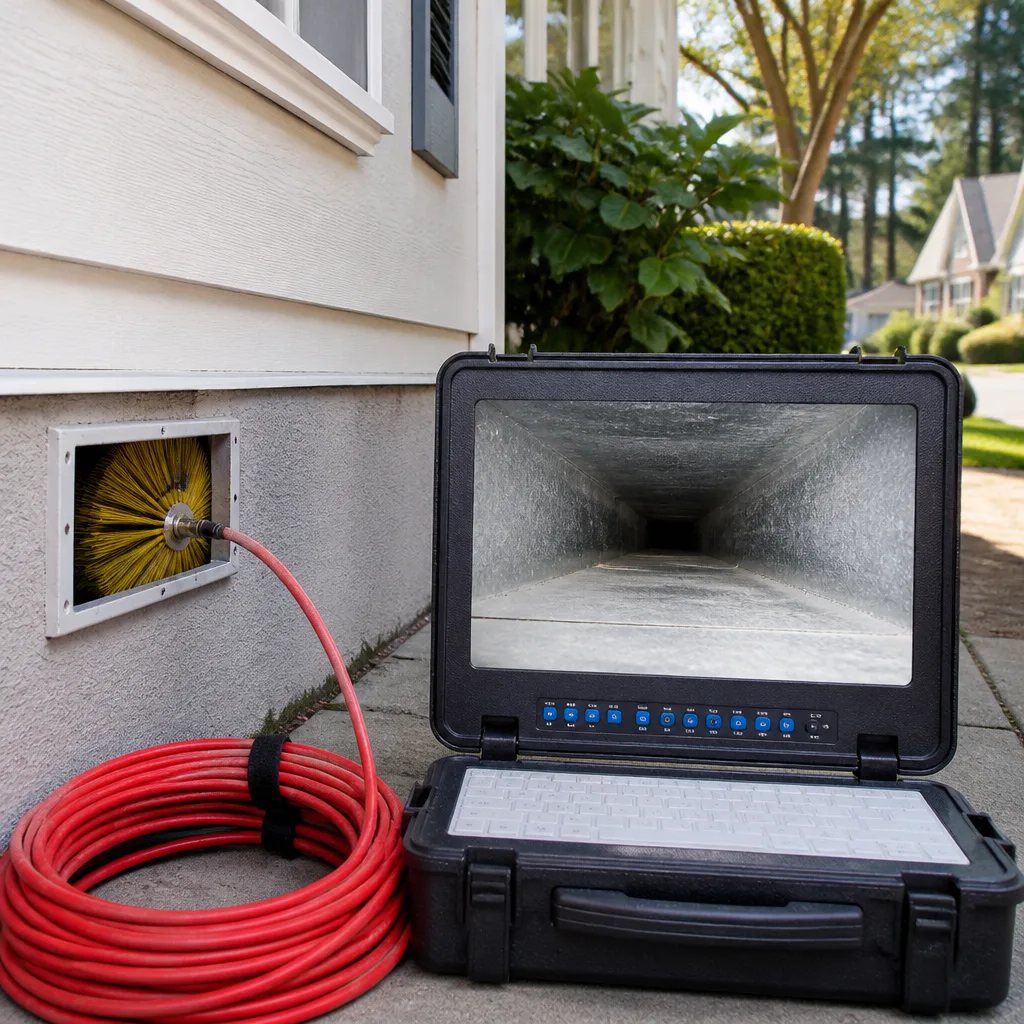 Camera inspection
 Sanitizing & deodorizing
Whole-system duct and dryer vent check with before-and-after photos - you see exactly what came out of your vents
That "$99 whole-house special" is a bait ad - the real number appears once they are in your hallway, or the "clean" is a shop-vac at the register. We photograph the inside of your ducts before and after instead.
Air Duct Cleaning Warning Signs: A Livermore Homeowner’s Reference Guide
Most duct cleaning guides hand you a checklist of obvious symptoms and stop there. Visible dust, a musty smell, a vent that isn’t blowing. What they don’t tell you is that dust on a supply register and dust on a return grille are caused by two completely different problems inside the system. Treating them as the same issue is exactly why some duct cleanings don’t solve the symptom the homeowner called about. In this Livermore reference guide, we’ll map specific warning signs to their likely mechanical cause, so you understand what’s happening inside your ducts before you ever pick up the phone.
Quick Answer
The most common air duct cleaning warning signs in Livermore are visible dust accumulation around supply registers, musty or dusty odors when the HVAC system runs, rooms that won’t hold temperature, and allergy symptoms that worsen indoors. Supply-side dust usually points to debris in the supply trunk line or branch ducts, while return-side dust typically indicates a filter bypass or return duct leak pulling unfiltered air from unconditioned spaces. If you’re seeing these signs, they’re not random. They correspond to specific conditions inside the duct system that a contact cleaning can address.
Styles & brands we work with
- Whole-home duct cleaning
- Dryer vent cleaning
- Camera inspection
- Sanitizing & deodorizing
Table of Contents
- Supply-Side vs. Return-Side Symptoms: Why the Difference Matters
- What Different Duct Odors Actually Mean
- Airflow Imbalance: When Rooms Won’t Heat or Cool
- Allergy Symptom Patterns and What They Suggest
- Livermore-Specific Triggers: Construction Dust, Farm Particulate, and Fire Ash
- Dust Accumulation: Where It Shows Up and What It Means
- When the Problem Needs Repair, Not Just Cleaning
Supply-Side vs. Return-Side Symptoms: Why the Difference Matters
Your duct system has two halves, and they fail in different ways. Supply ducts carry conditioned air from the furnace or air handler to the rooms. Return ducts pull air from the rooms back to the equipment to be filtered and conditioned again. When you see dust building up around a supply register, the air leaving that vent is carrying particulate from inside the supply duct itself. That’s a mechanical condition: debris has settled inside the duct, and airflow is lifting it into the room. When you see dust accumulating at a return grille, the return duct is pulling dust toward it from the room. That’s often a sign the return side is drawing air from somewhere it shouldn’t, like a wall cavity, attic space, or crawl area through a disconnected or poorly sealed joint.
This distinction matters because it changes what the fix looks like. A supply-side problem responds to contact cleaning that physically scrubs the duct wall surfaces and removes the debris load. A return-side problem may require cleaning plus sealing the leak or reconnecting the loose section. A company that treats both symptoms with the same vacuum-only pass may leave the actual return-side defect untouched. We’ve seen Livermore homes where the supply side was spotless but the return plenum had a half-inch gap pulling insulation fibers from an attic chase. The homeowner kept dusting. The dust kept coming back.
- Remove a supply register and reach in with a damp white cloth. Dark, greasy residue on the cloth means the supply duct walls are coated with debris. That’s a supply-side issue.
- Check return grilles for a dense, gray, fibrous buildup. That pattern often points to a return leak pulling particulate from outside the conditioned envelope, not just normal household dust.
- Note whether dust returns within days or weeks after cleaning surfaces. Fast return points to an active source in the duct, not the room itself.
Our air duct cleaning process uses Rotobrush contact cleaning to scrub supply duct walls rather than just vacuum loose debris. Occupants notice the difference in the first week after service, because the source of the resupplied dust is gone.
What Different Duct Odors Actually Mean
Odor is a diagnostic tool if you know what to listen for. Three distinct smell profiles come from three different mechanical conditions inside a duct system. Treating them all as “duct odor” wastes time and money. Here’s how to tell them apart.
- Musty or earthy smell, strongest when the system first starts: This typically points to microbial growth on or near the evaporator coil or in the drain pan, where moisture collects during cooling cycles. Livermore’s warm summers mean your air conditioner runs hard for months. Condensation in the coil area is normal, but organic debris accumulated there feeds the growth that creates the musty note. The duct cleaning fix includes cleaning the coil area and drain pan as part of the job, not just the duct branches.
- Burning or dusty smell on first startup in fall: This is surface debris on the heat exchanger or electric heating elements burning off. Dust settles on those surfaces all summer while the system cools. When you switch to heat, the first cycles scorch that debris. One or two cycles of that smell is common. If it persists for days, the debris load is significant and sits inside the equipment and adjacent ductwork, waiting to be removed.
- Chemical or solvent-like smell that never fades: This can indicate off-gassing from degrading duct liner material, sealants, or adhesives used in older duct installations. Some insulated duct liners break down over time and release volatile compounds into the airstream. This is not a cleaning-only fix. It may require repair or liner remediation, which is why air duct repair belongs in the same conversation as air duct cleaning.
Odor that changes with system operation, appears in every room, and lingers when the blower stops is duct-borne. Odor that’s strongest in one room points to a localized source in that branch or a disconnected joint pulling air from a wall void. Before calling anyone, note when the smell is strongest and whether it follows the air from the vents. That information shortens the diagnosis.
Airflow Imbalance: When Rooms Won’t Heat or Cool
A bedroom that’s always five degrees warmer than the rest of the house is often written off as a window problem or an undersized system. But a restricted duct branch changes the airflow balance just as effectively as a closed damper. When one branch can’t deliver its share of conditioned air, the static pressure in the system rises and other branches over-deliver. The hot room never catches up because it’s simply not getting the cubic feet per minute it needs. That’s a duct restriction problem, not an equipment problem.
Common restriction sources we find in Livermore homes include collapsed or kinked flex duct runs, debris accumulation at a sharp transition fitting, closed or partially closed balancing dampers, and disconnected branch takeoffs. Each produces the same symptom: a room that refuses to hold temperature while others are comfortable. Here’s how to read the symptom before anyone opens a wall.
- Close all interior doors and let the system run for 30 minutes. Walk each room and feel the supply air at the register. Weak flow in one room with strong flow elsewhere is a branch problem.
- Check whether the weak room’s return path is blocked. A closed door with no undercut or transfer grille starves the return side, and the room can’t exchange air even with a strong supply.
- Compare filter condition. A heavily loaded filter raises static pressure across the whole system and starves the farthest branches first. If the filter is fouled, replace it and retest before scheduling duct work.
- If the imbalance persists with a clean filter and open doors, the restriction is inside the duct branch itself. That’s a Duct Cleaning Livermore diagnostic, not a guess.
Cleaning removes debris that restricts airflow and restores branch capacity. If the branch is kinked or collapsed, repair replaces the restricted section. Either way, the fix is in the ducts, not in a bigger air conditioner. Understanding that before you replace equipment can save a Livermore homeowner thousands.
Allergy Symptom Patterns and What They Suggest
Allergy symptoms that improve when you leave the house and worsen when you’re home point to an indoor source. But the timing of those symptoms tells you something more specific. If you wake congested and improve by mid-morning, the overnight exposure in the bedroom is suspect. If symptoms flare only when the HVAC runs, the airstream is the delivery mechanism. If symptoms spike after the system kicks on for the first time in a season, the accumulated load in the ducts is being released into the living space.
Pollen and agricultural particulate from the Tri-Valley enter the home through open windows and on clothing. Once inside, they settle. Some of that material makes its way into the return ducts, where it cycles through the system. For a Livermore homeowner with seasonal allergies, that means the duct system can extend the exposure season long after the outdoor count drops. The duct holds the particulate. The blower resuspends it. The bedroom gets a second round of April pollen in July.
Duct cleaning removes that reservoir. The airstream stops resupplying the bedroom with last month’s allergens. If the symptoms persist after cleaning, the source is elsewhere in the home, and that’s information worth having. If the symptoms clear, the ducts were the vector. Both outcomes move the homeowner toward an answer.
For homes with whole-house filtration or IAQ systems from brands like Honeywell, Aprilaire, or Guardsman, cleaning the ducts ensures those systems operate against a clean duct load rather than recirculating what’s already inside the system. We’re trained on those platforms and understand how the filtration, humidity control, and air treatment side interacts with the ductwork.
Livermore-Specific Triggers: Construction Dust, Farm Particulate, and Fire Ash
Livermore sits in a unique position. The Tri-Valley’s agricultural land surrounds the city, new residential development corridors push construction dust into nearby neighborhoods, and California’s fire seasons deposit ash that infiltrates homes. Each source leaves a different signature in the ducts.
Construction Dust
Active development stirs fine silica and cementitious dust that travels farther than people expect. Homes within a mile of active grading or foundation work take in that fine particulate through open windows and on shoes. Once inside, the HVAC system pulls it into the returns. This dust is heavier than household dust and settles in the low points and transitions of the duct system. You’ll see it as a fine gray film on surfaces and a heavier-than-normal filter load. It responds well to contact cleaning, because Rotobrush scrubbing breaks the dust from the duct wall where it has compacted.
Agricultural Particulate
Working farmland surrounds Livermore, and agricultural operations produce organic particulate: soil fines, crop debris, and pollen from orchard and vineyard operations. This material is lighter and more fibrous than construction dust, and it tends to accumulate at return grilles and in the filter first. The organic component also interacts with moisture in the system, which is why a musty odor in a Livermore home with heavy agricultural particulate exposure often traces back to the coil area. The dust and the moisture combine there, and the smell follows.
Post-Fire Ash Infiltration
California fire seasons produce ash that carries long distances. Livermore homes take in that ash through the same paths as construction dust: windows, doors, and the ventilation system itself. Ash is alkaline and abrasive, and it doesn’t behave like normal household dust inside the HVAC. It clings to blower blades, clogs filter media quickly, and leaves a fine gray residue on the inside of supply ducts. If you ran your system during a smoky period without upgraded filtration, the ash is inside the system. A standard filter change clears the filter. It does not clear the ducts.
The pattern matters. Construction dust is a chronic low-grade infiltration. Agricultural particulate is seasonal and higher during harvest and bloom periods. Fire ash is acute, and the infiltration signature appears immediately after a smoke event. Matching the timing of the symptom to the local source helps a homeowner decide when cleaning is due and when it can wait. For a reference on Livermore local conditions, we maintain this guide with the Tri-Valley climate in mind.
Dust Accumulation: Where It Shows Up and What It Means
Dust in a home is normal. The question is where it collects and how fast it returns. Livermore’s dry summers mean low indoor humidity and more suspended particulate. The HVAC system becomes the home’s primary dust mover. Every time the blower runs, it stirs whatever has settled inside the ducts and distributes it through the supply registers.
The locations tell the story:
- Dust streaks on the wall above supply registers: This is the classic supply-side signature. Air exiting the register carries fine particulate that electrostatically adheres to the wall surface. The streaks form along the airflow path. Heavy streaking means the supply duct is heavily loaded.
- Dust matting on return grilles: The return grille is a filter for the return duct. Heavy matting means the return side is pulling a high particulate load from the conditioned space. It may also mean the return duct has a leak source pulling additional debris from an unconditioned area.
- Dust on furniture that reappears within days of cleaning: This points to an active circulation source. The blower is resuspending debris from inside the supply ducts and laying it down on every horizontal surface in the room.
- Dust inside the blower cabinet or on the filter frame: This is a bypass signature. Air is moving around the filter rather than through it, carrying unfiltered particulate into the equipment and supply side.
One caveat: a filter that is the wrong size, installed backward, or collapsed creates a bypass condition that loads the supply side no matter how often you clean. The duct cleaning should include a filter inspection as part of the scope. If the filter seal is poor, the cleaning fixes the duct but the filter problem remains, and the dust will return. The fix may be a properly sized filter frame or a better filter seal, not another cleaning. That’s the difference between restoring the system and just vacuuming it.
When the Problem Needs Repair, Not Just Cleaning
Some duct symptoms are not cleanliness problems at all. They are mechanical defects that no amount of cleaning will solve. If you’re calling for cleaning and the underlying problem is a disconnected branch, a crushed flex run, or a leaking plenum, cleaning alone leaves the symptom in place. Understanding which symptom means which situation saves you a service call that addresses the wrong thing.
Signs the problem is mechanical rather than just dirty:
- A room that never gets air no matter how long the system runs: A completely dead branch usually means a disconnected or fully collapsed duct, not a dirty one.
- Vent noise that changed suddenly: A new whistle, rattle, or flapping sound after recent work or a storm suggests a physical defect like a loose damper, separated joint, or damaged flex duct.
- Insulation fibers at a supply register: Flexible duct with degraded inner liners can shed particles into the airstream. That’s a liner failure, and the fix is duct section replacement or repair.
- Air blowing from a return where it never blew before: Reversed airflow in a specific room can mean a duct has separated and the system is drawing from or discharging into an unconditioned space.
We offer air duct repair alongside cleaning because these conditions coexist more often than not. A Livermore home with 30-year-old flex duct may have both a debris load from years of recirculation and a collapsed section from age. Cleaning the first without repairing the second leaves the room hot and the homeowner frustrated. A single company that handles both saves the second dispatch and the second diagnostic. The dryer vent cleaning side of our work follows the same logic: remove the obstruction, then confirm the vent path is sound enough to keep it clear.
Common Mistakes to Avoid
- Treating all dust the same. Supply dust and return dust have different causes. Clean the wrong side of the system and the symptom returns within weeks.
- Assuming a new filter fixed the problem. A filter catches what passes through it going forward. It does not remove what’s already settled in the supply ducts downstream of the filter.
- Ignoring odor until it becomes unbearable. A musty smell near the coil area is easier and cheaper to address early. Left alone, the contamination spreads into the adjacent ductwork and the scope grows.
- Assuming weak airflow means the HVAC is undersized. A restricted duct branch mimics an undersized system. Replacing the equipment without clearing the restriction wastes money and may leave the imbalance unchanged.
- Running the system during construction dust events with no filter changes. Livermore development activity means nearby homes take in fine particulate. A fouled filter under that load drives the debris deeper into the system.
- Calling for cleaning when the duct is physically broken. A collapsed flex run or separated joint needs repair. Book the cleaning and the repair together with a company that handles both.
See the difference
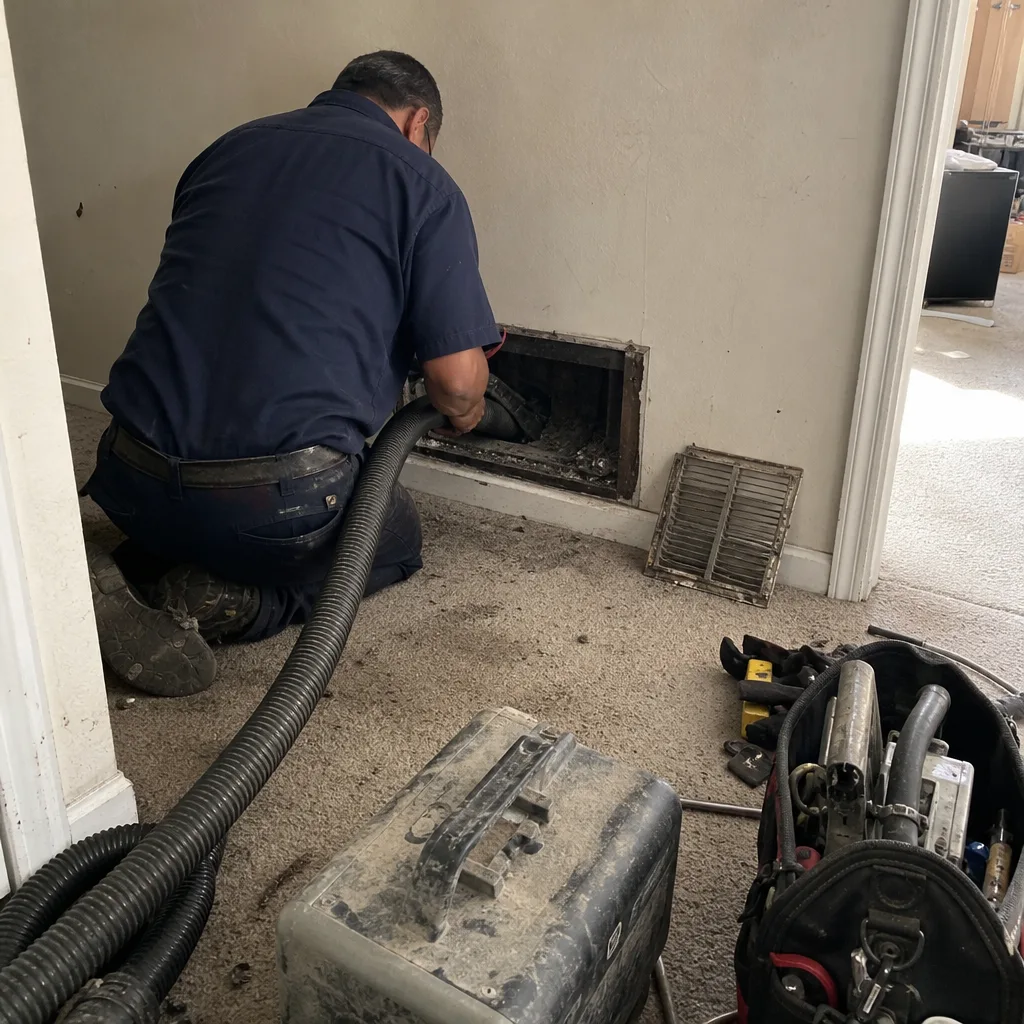 Before
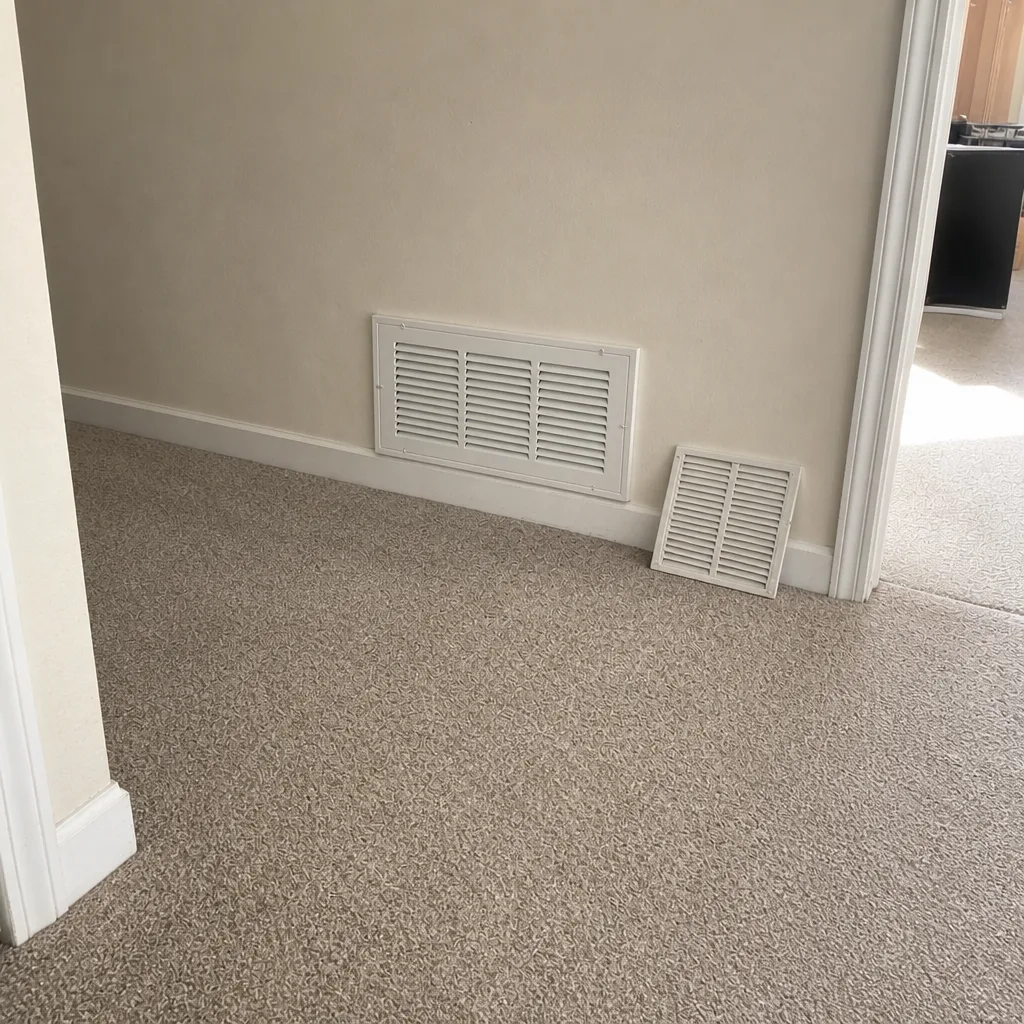 After
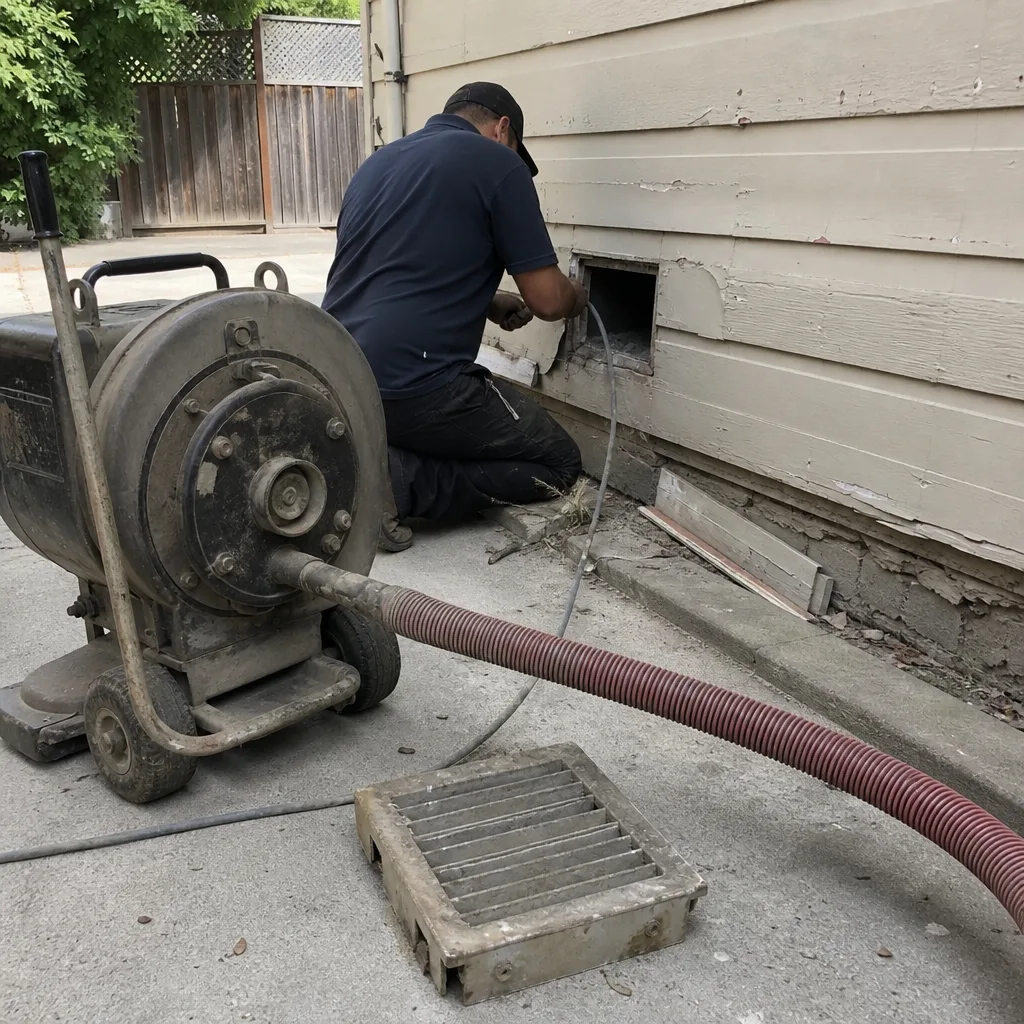 Before
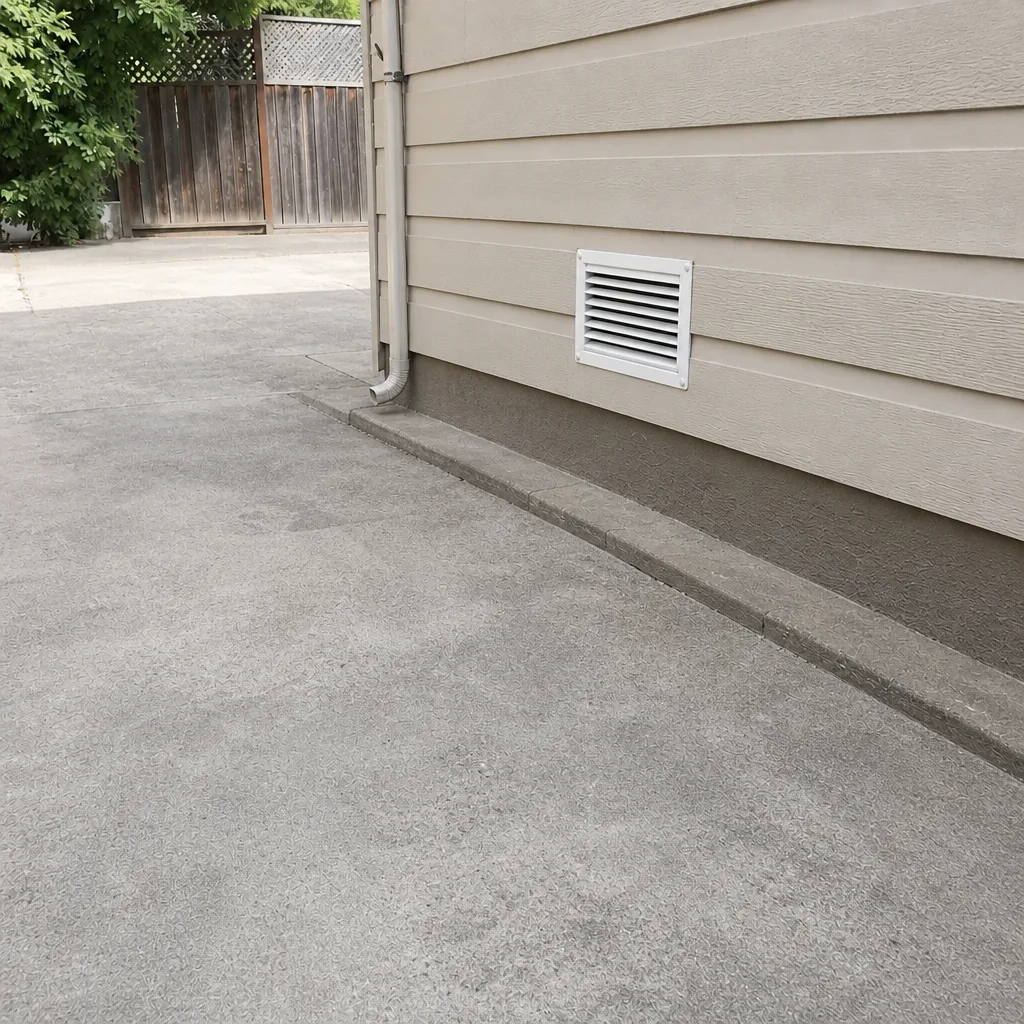 After
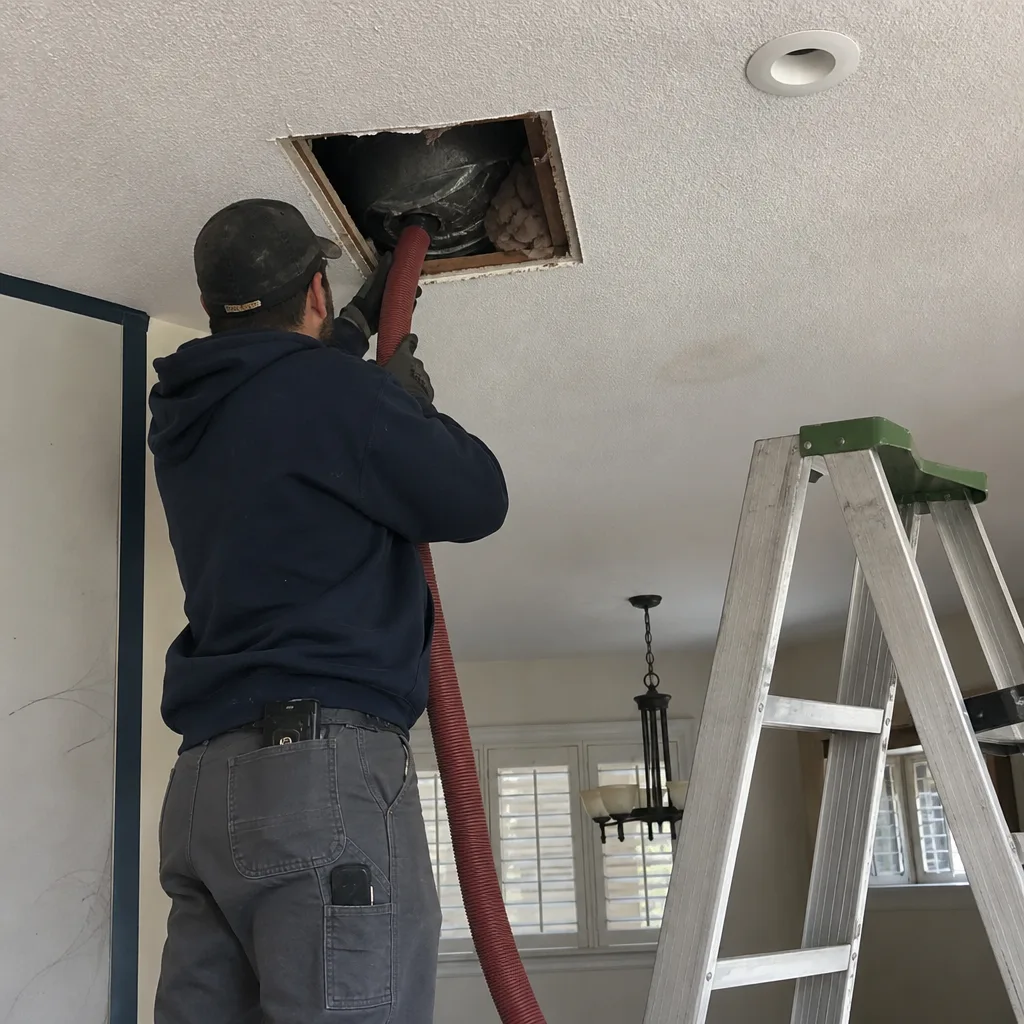 Before
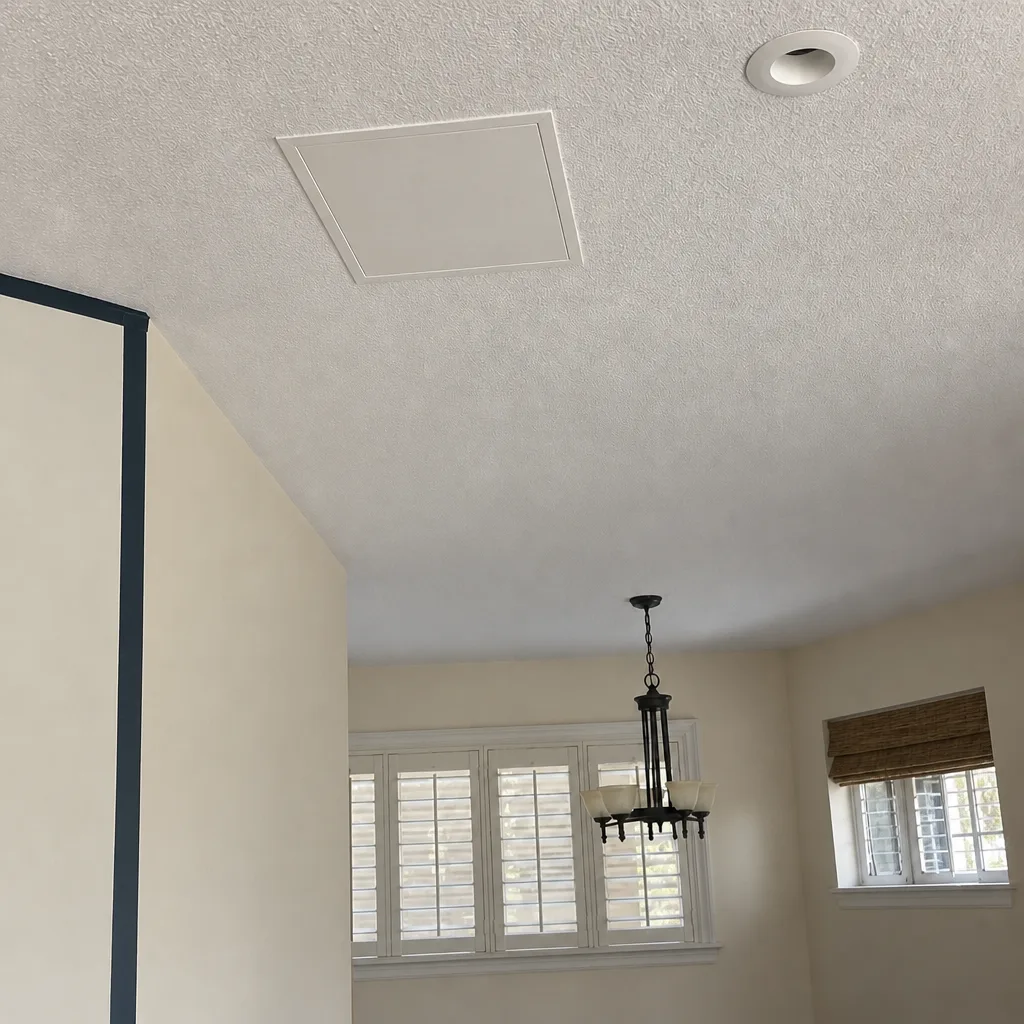 After
When to Call a Professional
Call when the symptom is persistent and you’ve ruled out the simple fixes: filter changed, vents open, doors not blocking return flow. Call when dust returns to surfaces within days of cleaning them, or when an odor follows the airstream every time the blower runs. Call when one room won’t hold temperature and the rooms around it are fine. These are duct-level conditions, and the diagnostic is faster with training and the right equipment than with guesswork. Duct Cleaning Livermore offers free estimates in Livermore. Call (833) 593-6464. We answer 24/7. Fast dispatch from 7am to 7pm, Sunday through Friday.
Frequently Asked Questions
The first signs are usually dust streaks forming on walls above supply registers, heavier-than-normal dust accumulation on furniture within a week of cleaning, and a musty or dusty smell when the system starts. Any one of these can have other causes, but two or more appearing together is a strong signal the duct interior is holding debris.
Dirty ducts produce symptoms that follow the airstream: dust at supply registers, odor from the vents, and resuspended dust on surfaces. Leaking ducts pull unfiltered air from unconditioned spaces and typically show dust concentrated at return grilles plus rooms that never reach temperature. A professional inspection tells them apart, and both conditions are common in older Livermore homes.
Livermore’s dry summer air keeps fine particulate suspended longer, and the HVAC system becomes the main mover of that dust through the house. Agricultural activity in the Tri-Valley and construction dust from development corridors add source material. When the ducts hold a debris load, the blower resuspends it every cycle and the dust returns within days of cleaning surfaces.
If allergy symptoms improve when you leave home and flare when the HVAC runs, the ducts are a likely exposure vector. Cleaning removes the accumulated pollen and particulate reservoir inside the system, so the airstream stops resupplying the rooms. If symptoms persist after cleaning, the source is elsewhere, and that also tells you something useful.
Most Livermore homes benefit from duct cleaning every three to five years, but that interval shortens with construction activity nearby, wildfire smoke exposure, pets, or agricultural particulate. Homes near active development or with occupants who have respiratory allergies often need service more frequently. A visual inspection of a supply register and the filter condition gives a good starting point. Call (833) 593-6464 and we can walk you through what to look for.
A restricted duct system raises static pressure and reduces airflow across the coil, which forces the equipment to run longer to reach the set temperature. That’s extra runtime and extra energy cost, even when the system eventually gets there. Clearing the restriction reduces the load and restores the system’s designed airflow.
The Bottom Line
Duct warning signs are specific. Dust at a supply register means something different than dust at a return grille. A musty smell near the coil means something different than a dusty smell at first startup. Airflow imbalance in one room is more often a duct restriction than an equipment failure. Livermore’s construction dust, agricultural particulate, and fire ash each leave a recognizable signature inside the system. Understanding the difference between a cleaning problem and a repair problem determines whether the fix lasts. When the symptom matches the mechanical cause, the remedy is clear. Call (833) 593-6464 for a free estimate. We answer 24/7. Fast dispatch from 7am to 7pm, Sunday through Friday.
Written by the team at Duct Cleaning Livermore, serving Livermore since 2015.