
Last updated November 4, 2026
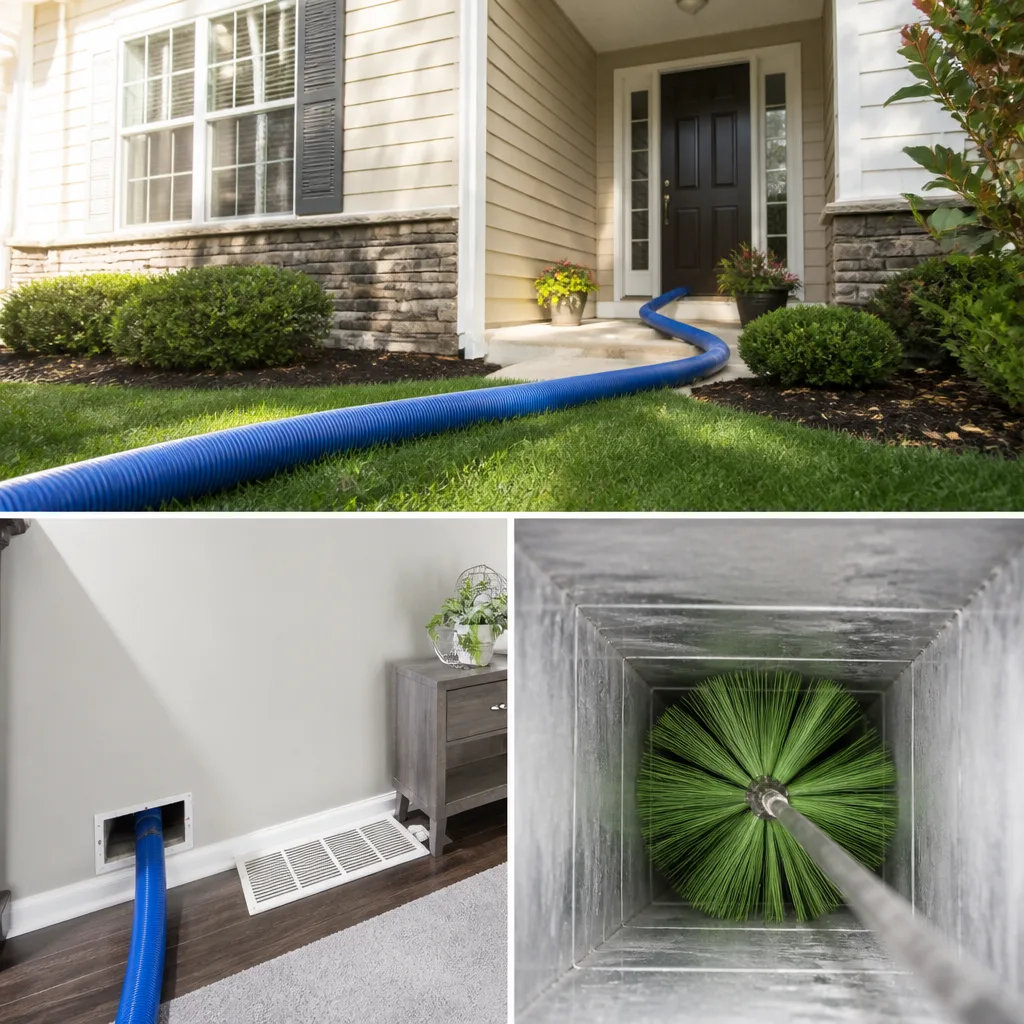 Whole-home duct cleaning
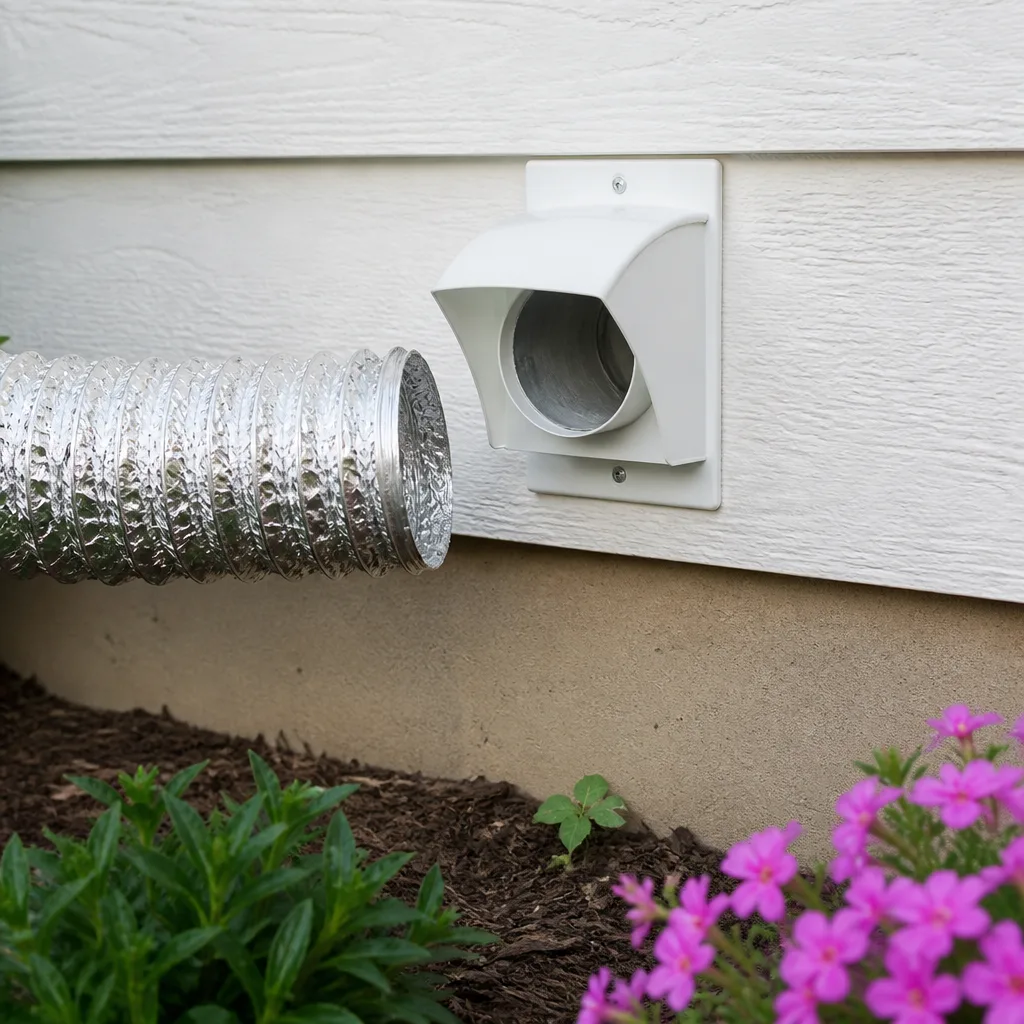 Dryer vent cleaning
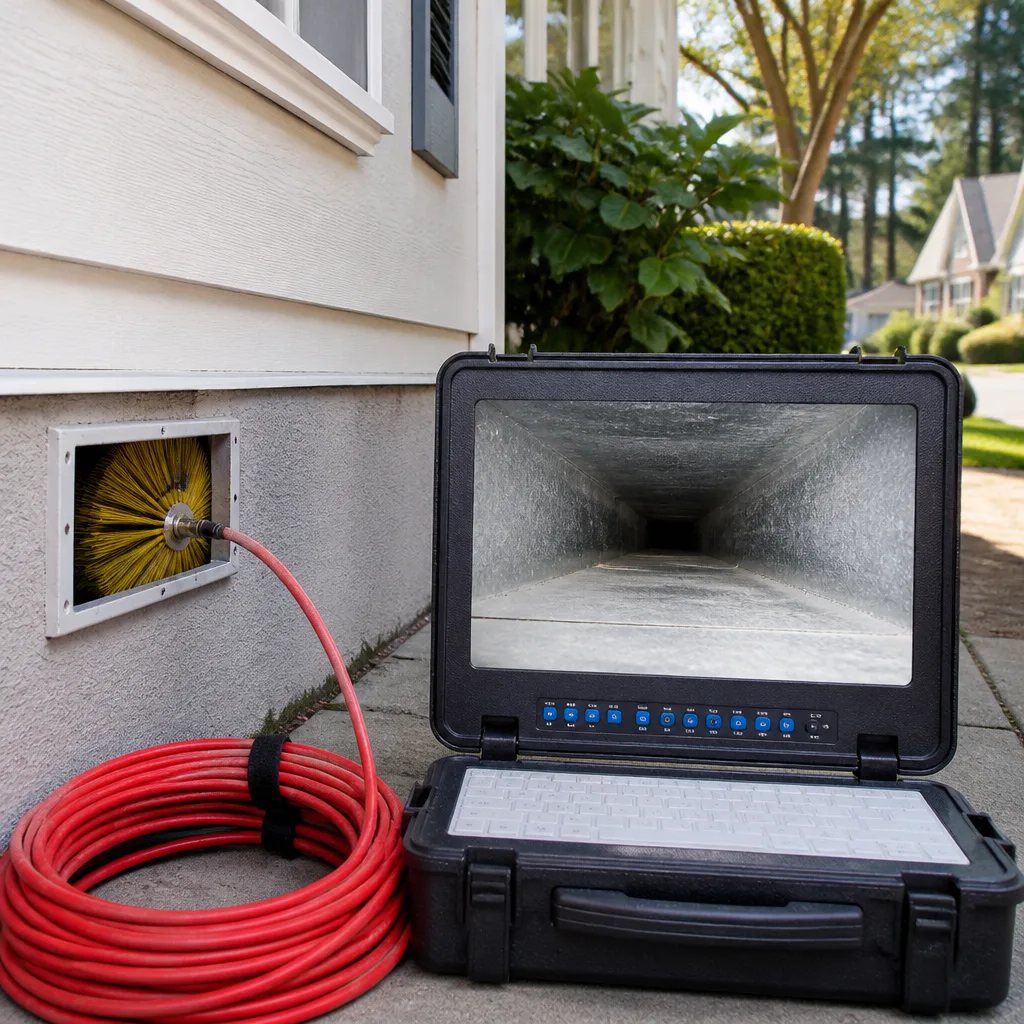 Camera inspection
 Sanitizing & deodorizing
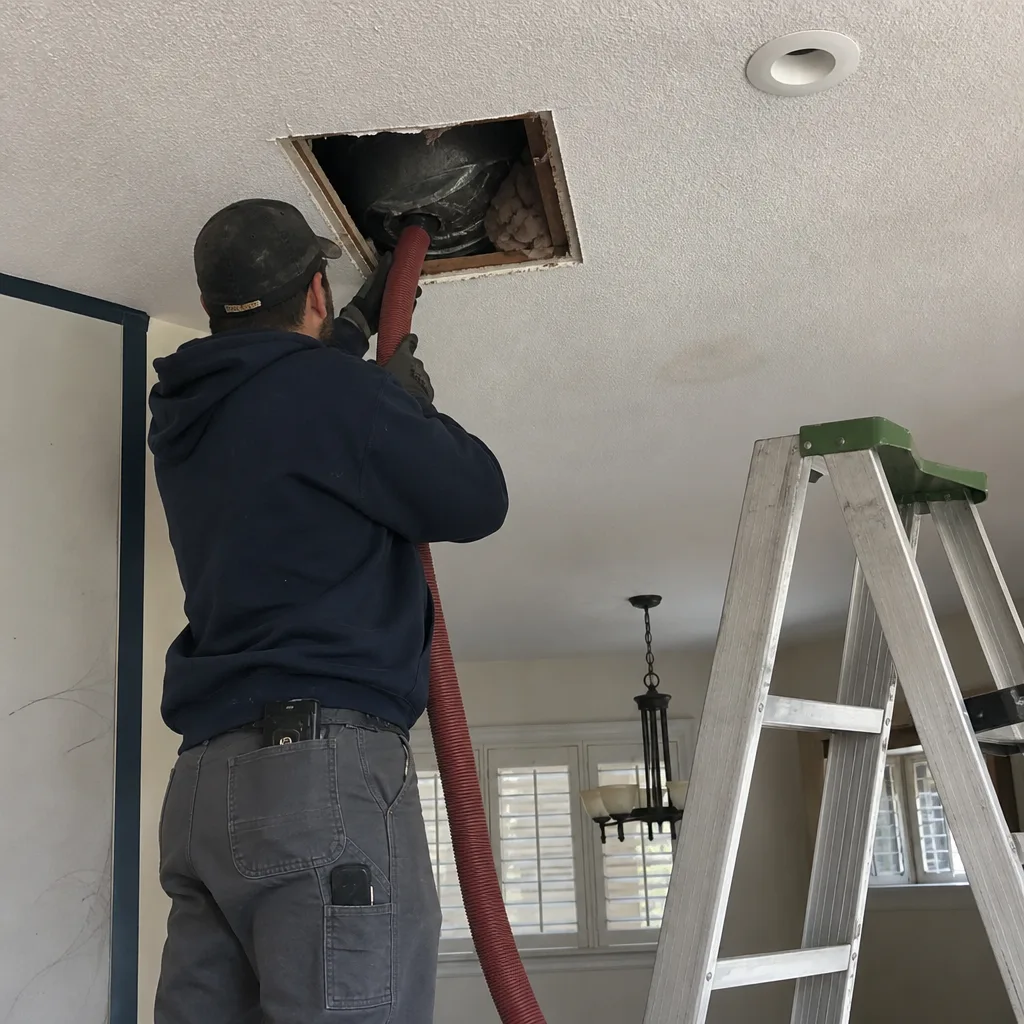
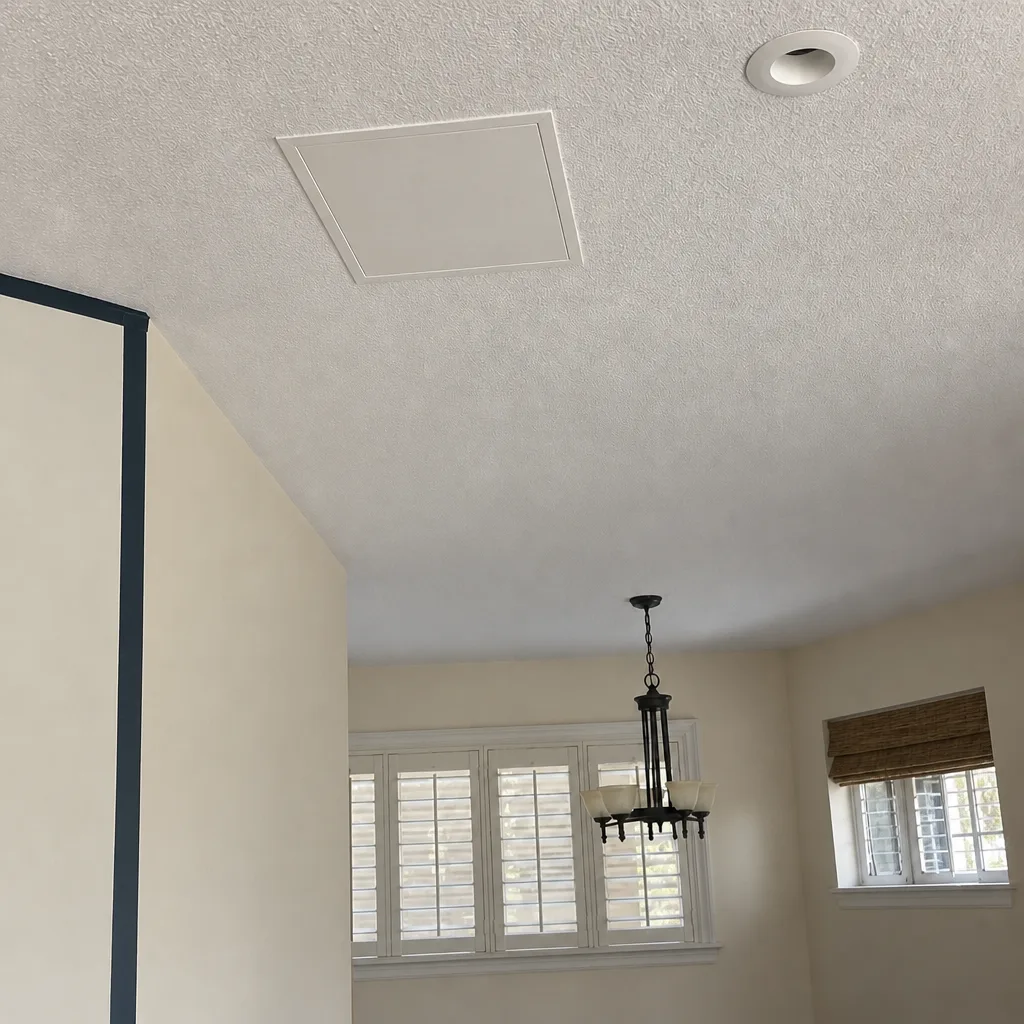
Whole-system duct and dryer vent check with before-and-after photos - you see exactly what came out of your vents
That "$99 whole-house special" is a bait ad - the real number appears once they are in your hallway, or the "clean" is a shop-vac at the register. We photograph the inside of your ducts before and after instead.
DIY vs Professional Air Duct Cleaning: The Livermore Homeowner’s Decision Guide
The most common misconception about duct cleaning is that it’s just vacuuming with a longer hose. A homeowner rents a machine, pokes a brush around, and assumes the job is done because the dust stopped flying. What that misses is the physics of airflow. A rented shop-vac moving 150 cubic feet per minute cannot contain the debris it dislodges from a duct trunk the way a 2,000-CFM negative-air machine does. The difference isn’t effort. It’s equipment. This guide explains what that gap means for homeowners in Livermore, what you can genuinely handle yourself, and when professional cleaning is the only method that actually removes what’s in there.
Styles & brands we work with
- Whole-home duct cleaning
- Dryer vent cleaning
- Camera inspection
- Sanitizing & deodorizing
Quick Answer
DIY duct cleaning can handle surface-level tasks like grille vacuuming and filter changes, but it cannot clean the interior surfaces of your duct system. The equipment required to physically scrub duct walls and contain the dislodged contaminants isn’t available at any hardware store rental counter. For Livermore homeowners dealing with allergy symptoms, musty odors, or visible dust accumulation, professional cleaning with negative-air containment delivers results that consumer-grade equipment cannot match.
Table of Contents
- What a Homeowner Can Legitimately Do
- The CFM and Containment Gap: Why Consumer Equipment Falls Short
- When DIY Is a Reasonable Interim Measure
- Risk Profile: DIY Attempts on Older Livermore Homes
- The Honest ROI Calculation: Rental Costs vs Professional Results
- What Professional Duct Cleaning Actually Involves
- Why the Equipment Matters: Rotobrush, Nikro, and Containment
- Common Mistakes to Avoid
- When to Call a Professional
- Frequently Asked Questions
- The Bottom Line
What a Homeowner Can Legitimately Do
Let’s be clear about what DIY maintenance can accomplish, because it’s not nothing. There are several tasks that homeowners in Livermore can handle that genuinely improve airflow and reduce visible dust without touching the interior of the duct run.
- Filter changes. This is the single most impactful maintenance task, and it requires no special training. A clean filter catches particulates before they enter the system. In Livermore’s dry, dusty summers, filters load faster than in coastal climates. Check yours every 30 to 60 days during peak cooling season.
- Register and grille vacuuming. Removing the vent covers and vacuuming the visible surfaces removes the dust that accumulates where air exits. This is surface cleaning, not duct cleaning, but it does reduce the amount of debris that recirculates when the system cycles on.
- Dryer vent visual inspection. You can check the exterior vent hood for lint buildup and confirm the flap opens when the dryer runs. A blocked dryer vent is a fire hazard, and dryer vent cleaning is one of the most straightforward safety upgrades a homeowner can schedule.
- Supply register cleaning. Wiping down the interior of the register boot, the first few inches of visible duct, removes surface dust where it’s most visible.
- Visual inspection of accessible duct runs. In homes with exposed ductwork in garages or crawl spaces, you can look for disconnected joints, kinked flex runs, and visible tears. These are problems an air duct cleaning professional should address, but identifying them yourself helps you describe the issue accurately when you call.
These tasks are legitimate maintenance. What they are not is duct cleaning. The interior surfaces of your duct system, the trunk lines and branch runs that carry conditioned air through the walls and ceilings, remain untouched by any of these efforts.
The CFM and Containment Gap: Why Consumer Equipment Falls Short
This is where the DIY argument breaks down, and it comes down to two numbers: airflow and containment. Consumer-grade equipment simply cannot move air fast enough or contain what it disturbs.
A typical rented carpet cleaner or shop-vac moves between 100 and 200 cubic feet per minute of air. That’s enough to pick up loose debris from a flat surface. It is not enough to create negative pressure inside a duct system. When you insert a brush into a duct trunk and agitate the dust adhered to the walls, that debris becomes airborne. Without sufficient airflow to capture it at the point of disturbance, it disperses through the system and into the living space.
A professional negative-air machine, like the Nikro units used in professional Duct Cleaning Livermore work, moves approximately 2,000 cubic feet per minute. That’s an order of magnitude more airflow. The machine connects to the duct system and creates a sealed vacuum environment. Every register is blocked off. The system is under negative pressure. When a technician agitates debris from the duct walls, that debris has exactly one pathway: into the vacuum, through the filtration system, and out of the home. It does not recirculate through the living room.
This is the fundamental difference between what a homeowner can do and what a professional achieves. A homeowner can loosen debris. A professional can loosen debris and guarantee it exits the system without entering the breathing air. The containment gap is the reason DIY duct cleaning often makes indoor air quality temporarily worse, not better.
Livermore homes add another variable: the climate. The dry air and high summer temperatures mean ducts accumulate fine, powdery dust that hangs in the air easily once disturbed. Without negative-air containment, that dust settles back into the home within hours, coating furniture and floors in a fresh layer. This isn’t a defect in the homeowner’s technique. It’s a limitation of the equipment.
When DIY Is a Reasonable Interim Measure
There are three scenarios where DIY efforts make sense as a stopgap, not a replacement for professional cleaning.
- A single dusty register. If one vent in one room shows visible dust accumulation while others are clean, a homeowner can remove the grille and vacuum the register boot. This addresses a localized surface issue. If the dust returns within a week or two, the problem is deeper in the branch run, and vacuuming will never reach it.
- Post-renovation surface cleaning. After drywall work or flooring replacement in Livermore, fine dust settles on every horizontal surface, including vent covers and register interiors. Removing and washing the grilles, wiping the visible boot, and changing the filter is worthwhile. What this does not address is construction dust pulled into the duct run itself during the renovation. That requires full-system cleaning.
- Between professional intervals. If you’ve had the system professionally cleaned and want to extend the interval before the next service, regular filter changes and grille vacuuming help. They keep surface dust from re-entering the system at the registers. They do not clean the duct interiors, but they slow the rate at which those interiors re-accumulate debris.
In all three scenarios, the DIY work is a supplement to professional service, not a substitute. The distinction matters because homeowners who expect a rented machine to achieve what a professional system achieves end up frustrated, and their ducts remain dirty.
Risk Profile: DIY Attempts on Older Livermore Homes
Livermore has a substantial stock of homes built before 1980, and those homes present specific risks that newer construction does not. Inserting tools into older duct systems without understanding what’s inside can create problems that are more expensive to fix than the cleaning would have cost.
Friable duct liner. Some older sheet-metal ducts are lined with a fiberglass material that degrades over time. The liner becomes brittle and friable, meaning it crumbles when disturbed. A homeowner pushing a stiff brush into a lined duct can tear that liner, releasing fiberglass particles into the airflow. Once the liner is damaged, the correct fix is duct repair or replacement, not cleaning. Identifying friable liner before it’s disturbed requires knowing what to look for.
Asbestos-containing mastic. Homes built before 1980 may have duct joints sealed with mastic that contains asbestos. The material is safe when intact. It becomes a hazard when scraped, brushed, or aggressively cleaned. A professional knows to leave intact mastic alone and clean around it. A homeowner with a rented brush has no way to identify the material, and the aggressive scrubbing that feels like “really getting in there” is exactly what should not be done.
Flex duct damage. Even in newer Livermore homes, flex duct is common in branch runs. Flex duct is a plastic inner liner wrapped in insulation and an outer vapor barrier. It tears easily. Inserting a stiff tool, snaking a camera, or forcing a brush into a flex run can puncture the inner liner. Once air leaks from a flex duct, conditioned air goes into the wall cavity instead of the room, and dust from insulation can enter the airstream. Professional cleaning uses contact-cleaning methods designed for flex duct, not against it.
These risks don’t make DIY impossible. They make DIY unwise without the training to identify what’s inside the ducts before tools go in. The cost of repairing a torn liner or damaged flex duct frequently exceeds the cost of professional cleaning in the first place.
The Honest ROI Calculation: Rental Costs vs Professional Results
Homeowners who choose DIY often do so on cost. Let’s run the actual numbers for a Livermore homeowner considering the rental route.
The DIY cost estimate. A hardware store rental for equipment with any meaningful airflow runs $40 to $80 per day, depending on the machine. A basic brush kit adds $20 to $40. Disposable filters for the rental machine add $10 to $20. Total out-of-pocket: $70 to $140. Time commitment for a full-home attempt: four to eight hours, including setup, cleaning each register, moving furniture, and cleanup. The result is surface cleaning of the register boots and disruption of dust already loose in the system.
The professional cost frame. Professional air duct cleaning for a typical Livermore home is priced by written estimate, with the price set before work starts. You’re paying for airflow that actually extracts debris, containment that prevents redistribution, and contact cleaning that removes the adhered dust layer, not just loose particles. The result is documented: before-and-after photos of your own ducts, showing what was removed and that the work was actually done.
The ROI calculation isn’t just dollars per hour. It’s outcome per dollar. A rented machine that disperses debris rather than extracting it costs less and achieves functionally nothing for the duct interiors. Professional cleaning costs more and achieves the actual goal: duct walls that are physically scrubbed, contaminants that are contained and removed, and air that is measurably cleaner after the work.
For homeowners who value the hours of their own time, the calculation shifts further. Four to eight hours of rented-equipment work that produces no interior cleaning is the same time investment as a professional service that produces documented results, without the homeowner having to carry equipment, set up containment, or clean up afterward.
What Professional Duct Cleaning Actually Involves
Understanding what a professional service does makes the equipment gap concrete. This is not a longer version of the same vacuuming. It is a different method entirely.
- System assessment. The technician inspects the duct system, identifies the layout, checks for accessible access points, and notes any issues like disconnected runs, crushed flex, or visible contamination. This assessment determines what cleaning method is appropriate and whether any repairs are needed first.
- Containment setup. A negative-air machine is connected to the duct system. All registers are sealed. The system is placed under negative pressure so that any dislodged debris flows toward the vacuum unit, not into the living space. This is the step that consumer equipment cannot replicate.
- Contact cleaning. Using a Rotobrush contact-cleaning system, the technician physically scrubs the interior walls of the duct runs. The rotating brush head agitates the adhered dust layer, and the negative-air system immediately extracts the loosened debris. This is mechanical removal, not vacuum-only suction.
- Branch run cleaning. Each branch line receives the same contact cleaning, with tools sized appropriately for the duct diameter. Flex duct is cleaned with methods that protect the liner.
- Register and grille replacement. Cleaned registers are reattached. Damaged grilles are noted for repair.
- Documentation. Before-and-after photos are taken inside the duct runs. The homeowner sees exactly what was removed and confirms the work was performed.
This process typically takes several hours for a full system, not because the technician is slow, but because the contact cleaning actually reaches every foot of ductwork. The goal is restoration of the duct system’s interior to a clean condition, not a quick pass through the visible sections.
Why the Equipment Matters: Rotobrush, Nikro, and Containment
Most local duct cleaners arrive with a shop-vac and a brush. That’s the traditional method, and it’s the reason the industry has a reputation for inconsistent results. The companies that produce reliably thorough cleanings use equipment that addresses both halves of the problem: physical removal and containment.
Rotobrush contact cleaning is the mechanical difference. Instead of relying on suction to pull loose debris past a passive brush, the Rotobrush system rotates a brush head through the duct, physically scrubbing the walls while simultaneously vacuuming the dislodged material. It’s the difference between wiping a counter and waving a vacuum hose over it. The wiped counter is actually clean. The vacuumed one just has less loose dust on it.
Nikro negative-air machines provide the containment half. The unit is sealed to the duct system and creates high-volume airflow, approximately 2,000 cubic feet per minute, through a HEPA-filtered exhaust. When the system is under negative pressure, dislodged debris cannot escape into the home. It flows to the vacuum. This is what prevents the post-cleaning dust cloud that gives DIY attempts their bad reputation.
Abatement Technologies air-quality controls represent the same category of equipment used in mold remediation and hazmat work. The commitment to containment isn’t casual. It signals that the technician understands indoor air quality as a health outcome, not just a visual one.
These brands matter because they represent a different category of service. A company running Rotobrush, Nikro, and Abatement Technologies equipment is performing the same mechanical cleaning that commercial and industrial contractors use, applied to residential systems. The alternative, a vacuum and a brush, is a different product entirely, even when both are marketed as “duct cleaning.”
Common Mistakes to Avoid
- Assuming the equipment rental doubles as a duct cleaner. A carpet cleaner rental has a port that fits a hose, but it moves too little air to create containment. It will loosen debris and redistribute it, not extract it. If the machine doesn’t create negative pressure in the duct system, it’s not cleaning the ducts.
- Using a leaf blower to “blow out” the ducts. This is a dangerous approach that pressurizes the system and forces debris through every register into the living space at high velocity. It also risks damaging flex duct connections. Pressurization is the opposite of what proper cleaning requires.
- Ignoring the dryer vent while cleaning the ducts. The dryer vent is the single highest-risk component in most homes. Lint accumulation is a leading cause of residential fires. Even if you only schedule one service, dryer vent cleaning should be the priority for safety.
- Scrubbing registers without checking the filter first. If the filter is clogged, the system is pulling air around it, bypassing filtration entirely. Clean the filter situation first. Without a clean filter, any duct cleaning result degrades quickly.
- Attempting to clean insulated flex duct with stiff tools. Flex duct tears easily. A stiff brush or improvised tool can puncture the inner liner, creating an air leak inside the wall. Once damaged, flex duct needs repair or replacement, which costs more than the cleaning would have.
- Treating DIY maintenance as a substitute for professional intervals. Filter changes and register vacuuming extend the time between professional cleanings. They do not eliminate the need for them. Duct interiors still accumulate the fine dust that surface cleaning cannot reach.
- Choosing a contractor on price alone. The cheap coupon companies use the vacuum-and-brush method precisely because it’s fast and inexpensive. The result is surface cleaning sold as full-system cleaning. Ask what equipment the company uses and whether they provide before-and-after photos of your ducts. A company that can’t show you the results didn’t achieve them.
When to Call a Professional
Professional duct cleaning is the right call in specific, identifiable situations. If you’ve noticed allergy symptoms that worsen when the HVAC runs, a musty odor from the vents, uneven airflow between rooms, or dust accumulation on surfaces within days of cleaning, the duct system is circulating contaminants. These are not surface problems, and surface cleaning will not address them.
If you’ve recently completed renovation work in Livermore, construction dust has likely been pulled into the ducts. If you’ve moved into a home with no service history, the duct condition is unknown, and an inspection is warranted. If your dryer vent hasn’t been cleaned in more than a year, that’s a fire-safety issue independent of indoor air quality.
Duct Cleaning Livermore offers free estimates in Livermore. Call (833) 593-6464 to schedule an assessment. We answer 24/7. Fast dispatch from 7am to 7pm, Sunday through Friday.
Frequently Asked Questions
Professional duct cleaning in Livermore is priced by written estimate, with the price agreed before work starts. The cost depends on the size of the home, the number of duct runs, and the condition of the system. A typical single-family home is not an enormous investment relative to the cost of rental equipment plus your own time, and the result is documented cleaning rather than a surface pass. Call (833) 593-6464 for an exact quote. Estimates are free.
Cheaper quotes almost always reflect a vacuum-only method. A technician with a shop-vac and a brush can move through a home quickly, but the brush dislodges debris the vacuum cannot contain, and the duct walls are never physically scrubbed. The cheap quote buys a faster, less thorough process. Ask what equipment the company uses. If they can’t name their cleaning system and their containment method, the quote is low for a reason.
Ask for before-and-after photos taken inside the duct runs. A professional service should document the condition before cleaning and the results after. If a company can’t show you the interior of your own ducts, they didn’t capture evidence because there was nothing to show. This is the clearest way to separate contact cleaning from a drive-by vacuum service.
Most Livermore homes benefit from professional cleaning every three to five years, with more frequent service for homes with pets, allergy sufferers, recent renovation work, or unusually dusty conditions. Dryer vents should be cleaned annually at minimum, more often with heavy laundry use. The interval depends on how quickly dust accumulates in your specific system.
A shop-vac can clean the visible register boot and the first few inches of a supply run. It cannot reach the interior surfaces of the duct trunk or branch runs, and it moves far too little air to contain dislodged debris. The attempt often makes indoor air quality worse by loosening dust that then recirculates through the home. Surface vacuuming is fine; interior cleaning requires negative-air equipment.
Yes. Homes built before 1980 may contain friable duct liner or asbestos-containing mastic that must not be aggressively disturbed. Flex duct in any age of home tears easily under stiff tools. A professional assesses the duct interior and chooses methods appropriate to the materials present. A homeowner cannot visually identify friable liner or asbestos mastic from the register opening.
The Bottom Line
The DIY versus professional question comes down to equipment, not effort. A homeowner in Livermore can handle filter changes, register vacuuming, and visual inspections. These are valuable maintenance tasks. What a homeowner cannot do is replicate the mechanical cleaning and containment that professional equipment provides. The rented machines move too little air to contain what they disturb, and the tools that actually clean duct walls aren’t sold at hardware stores. For the duct interiors that matter, contact cleaning with negative-air containment is the only method that removes adhered debris without redistributing it. The decision isn’t whether to care about your air. It’s whether to use the right equipment for the job.
Written by the team at Duct Cleaning Livermore, serving Livermore since 2015.
See the difference
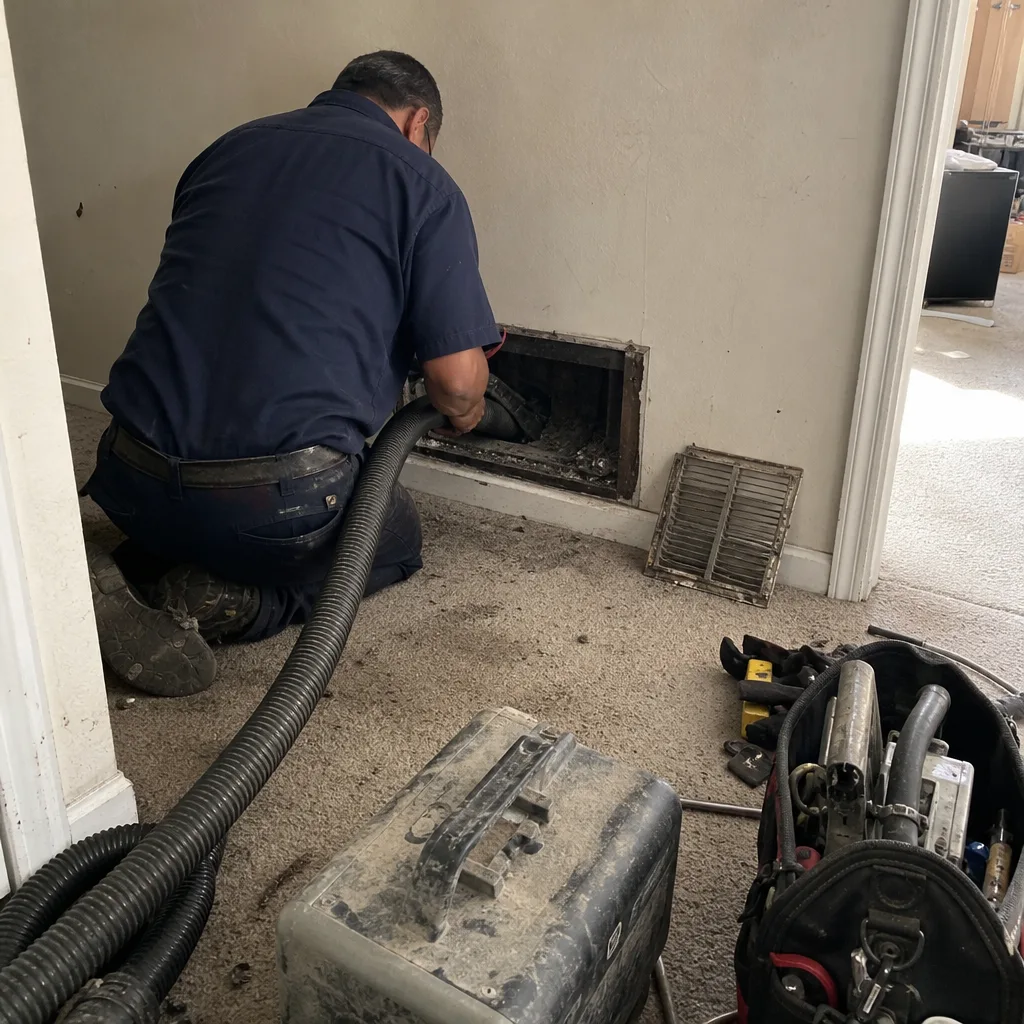 Before
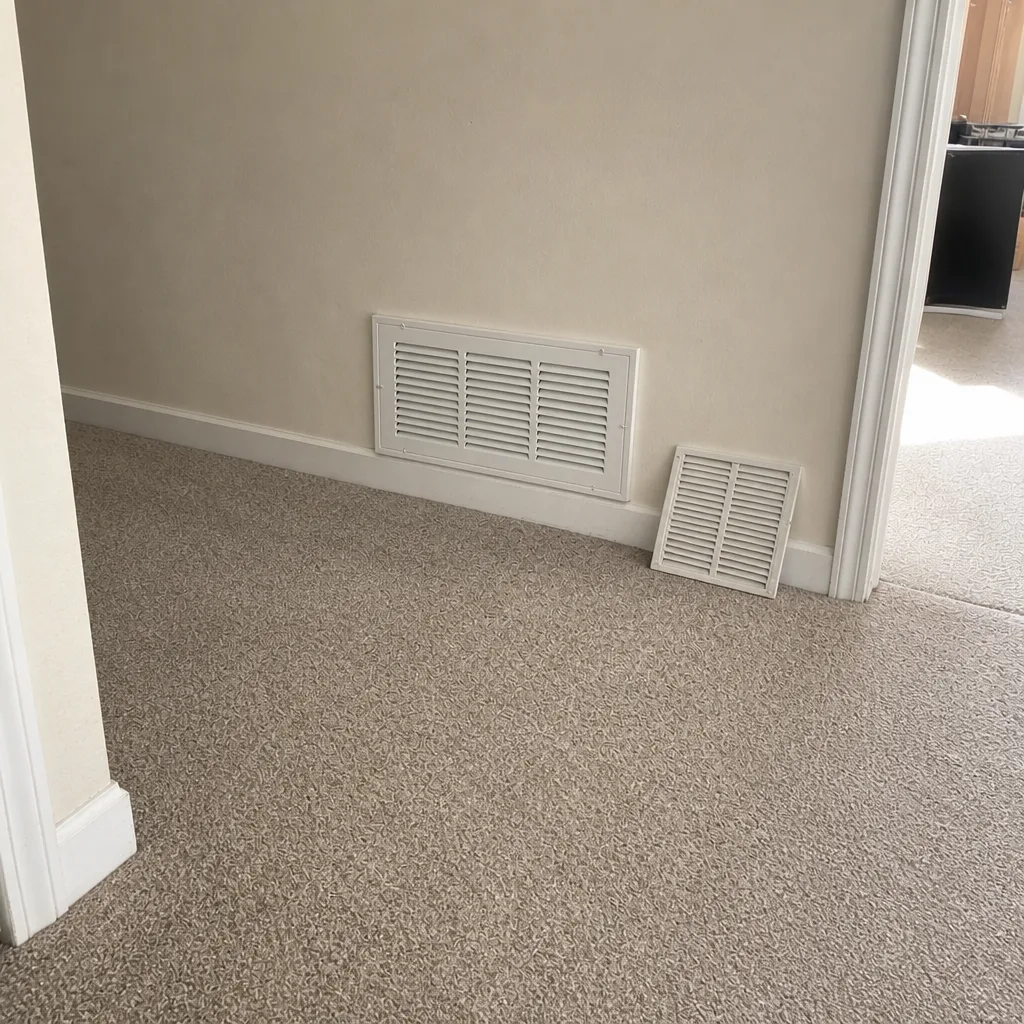 After
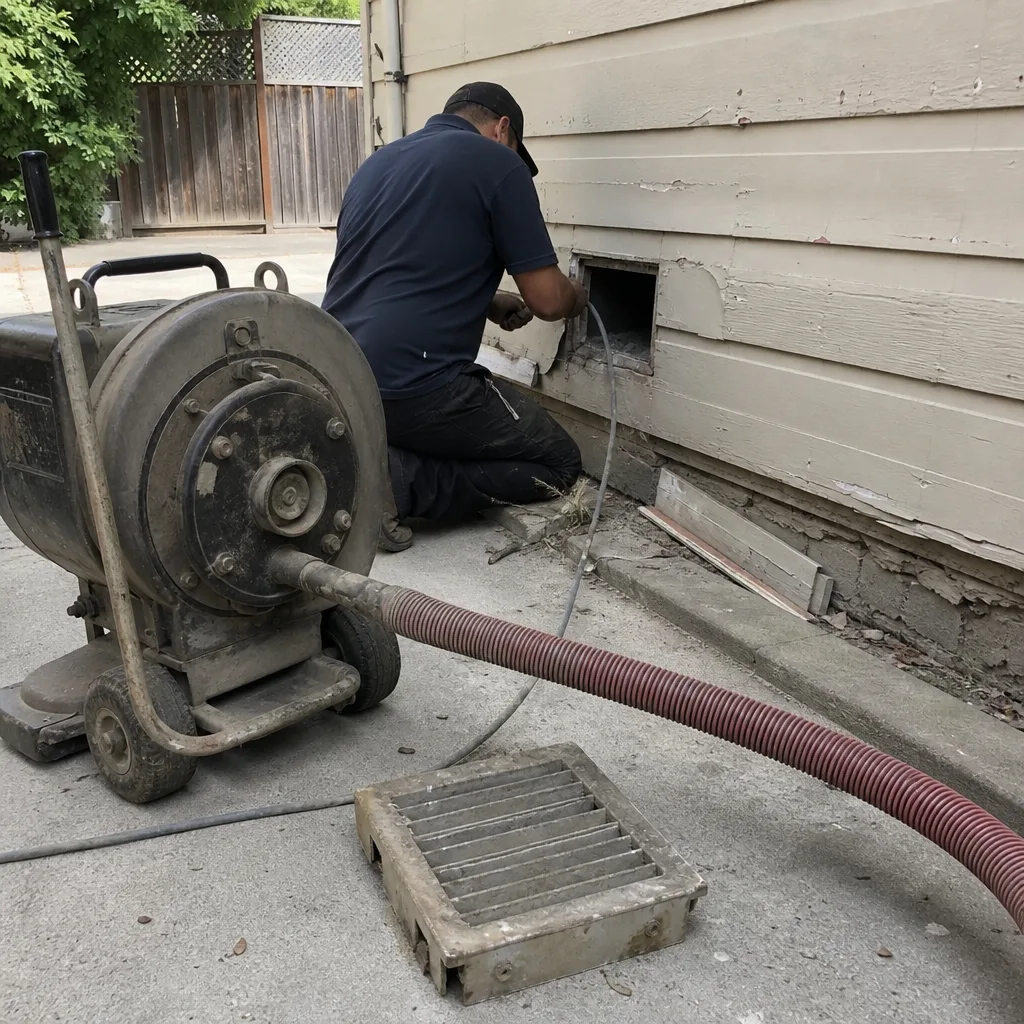 Before
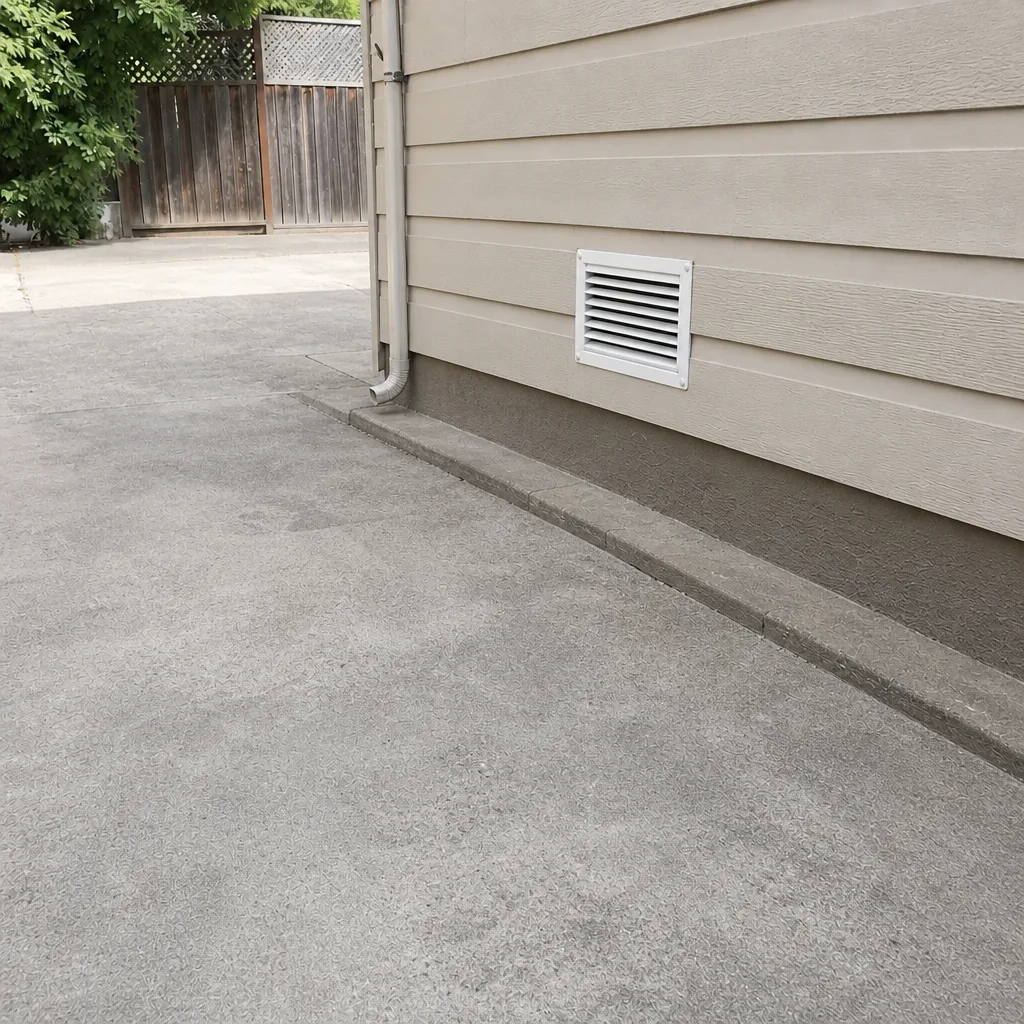 After
 Before
 After