
Last updated November 4, 2026
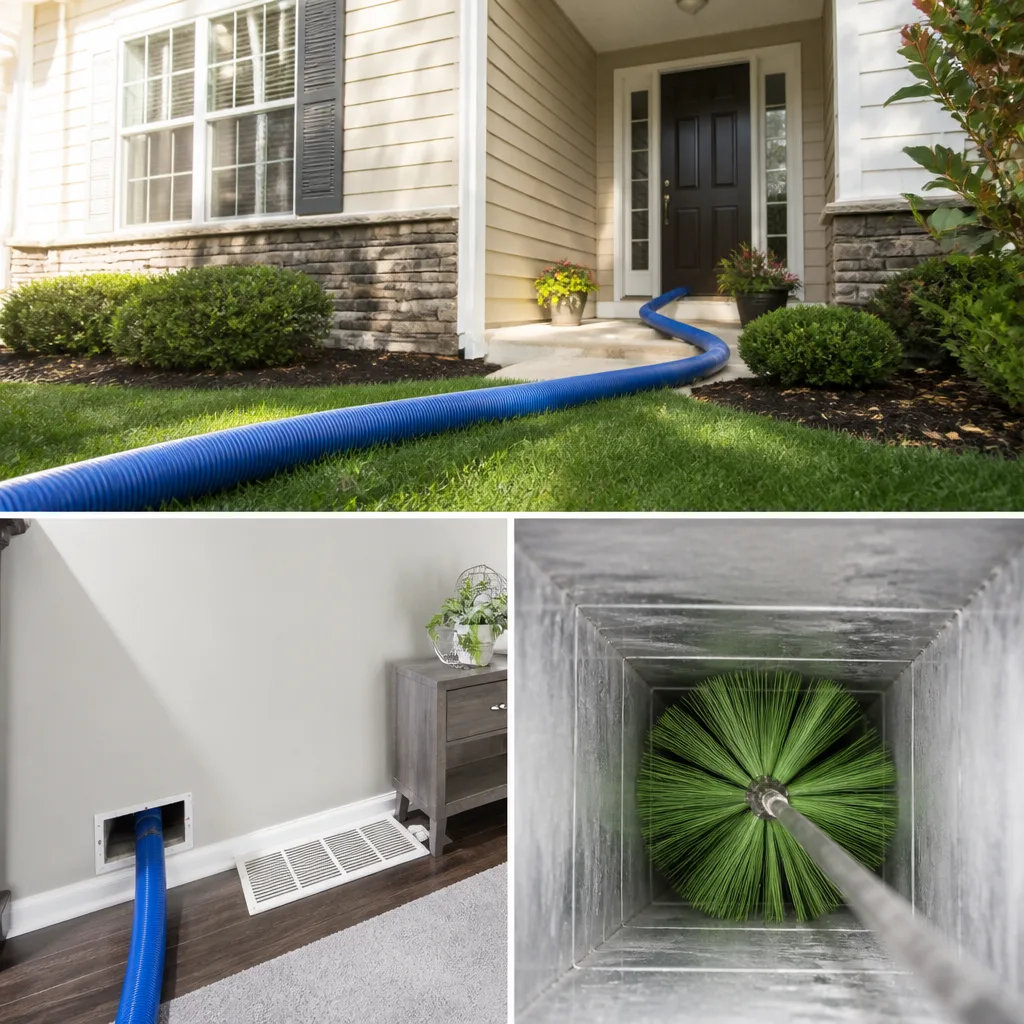 Whole-home duct cleaning
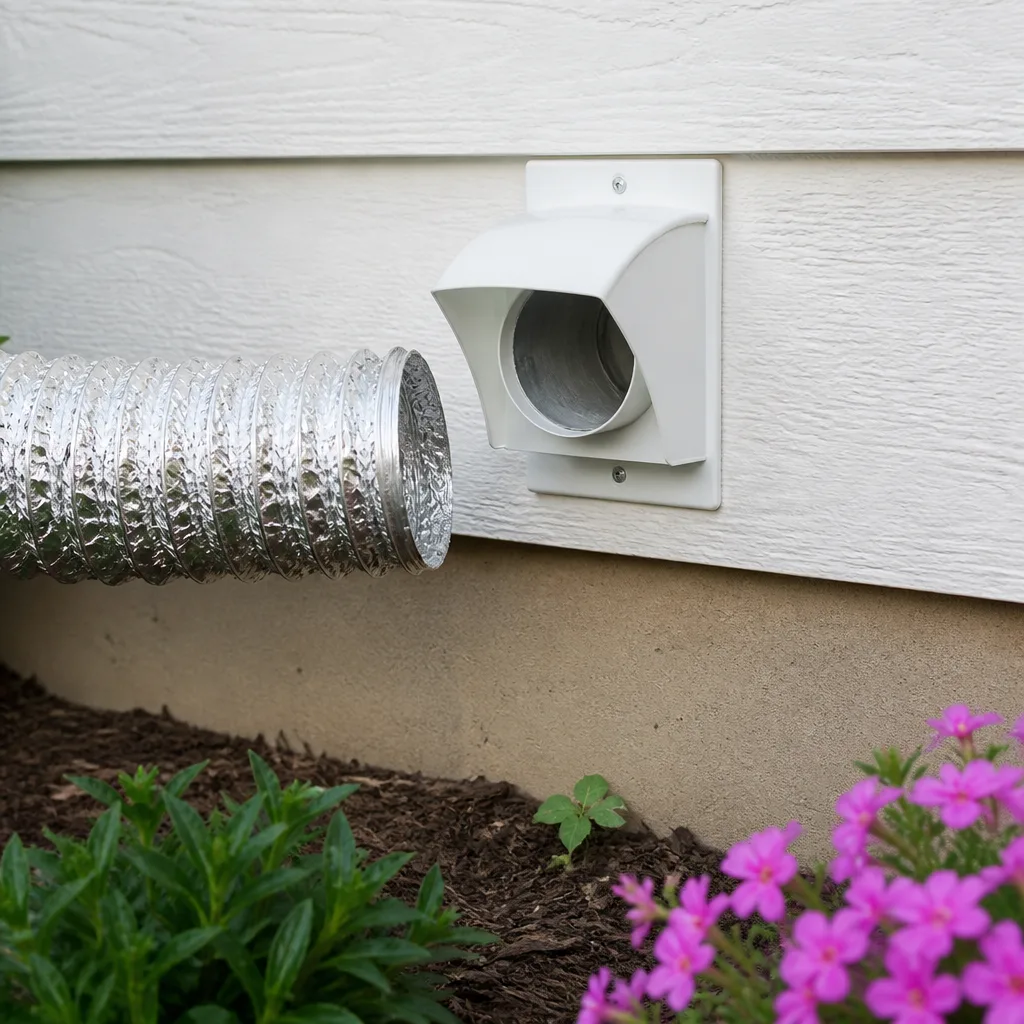 Dryer vent cleaning
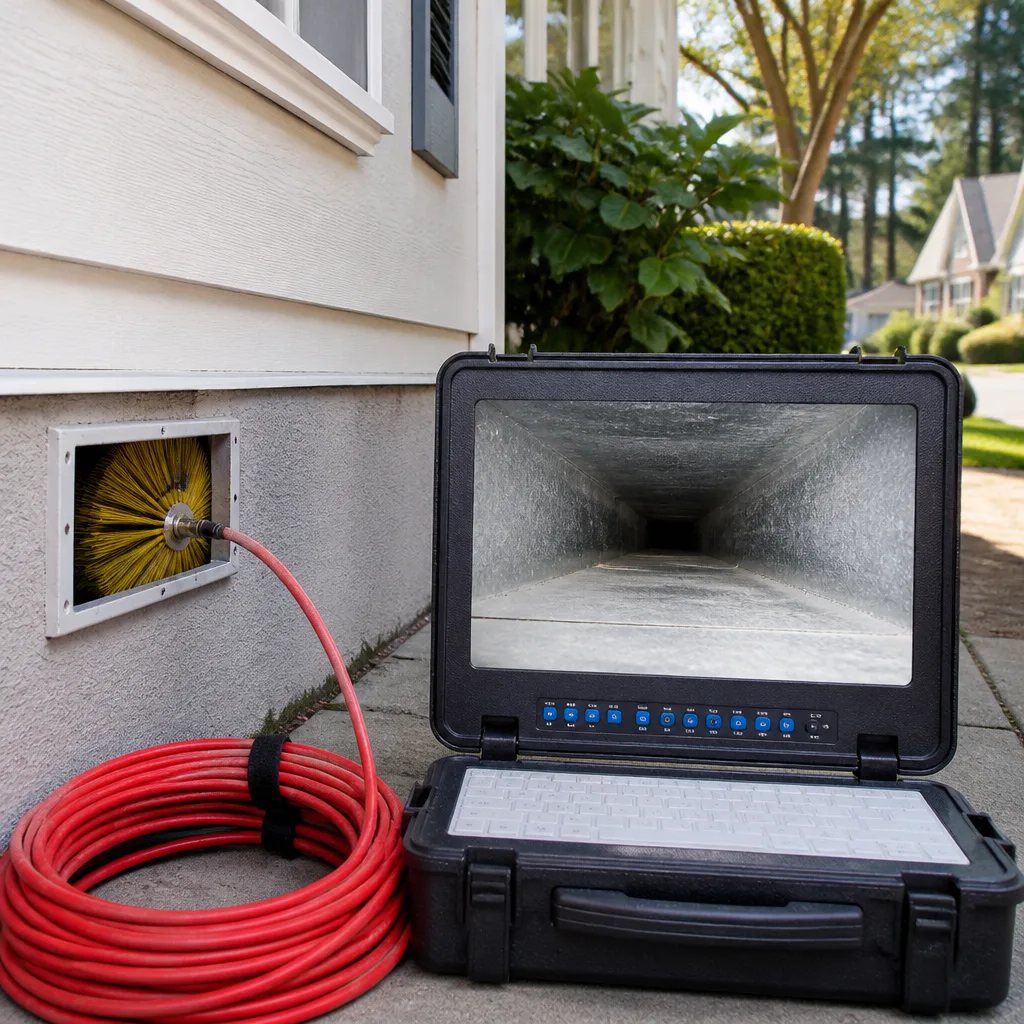 Camera inspection
 Sanitizing & deodorizing
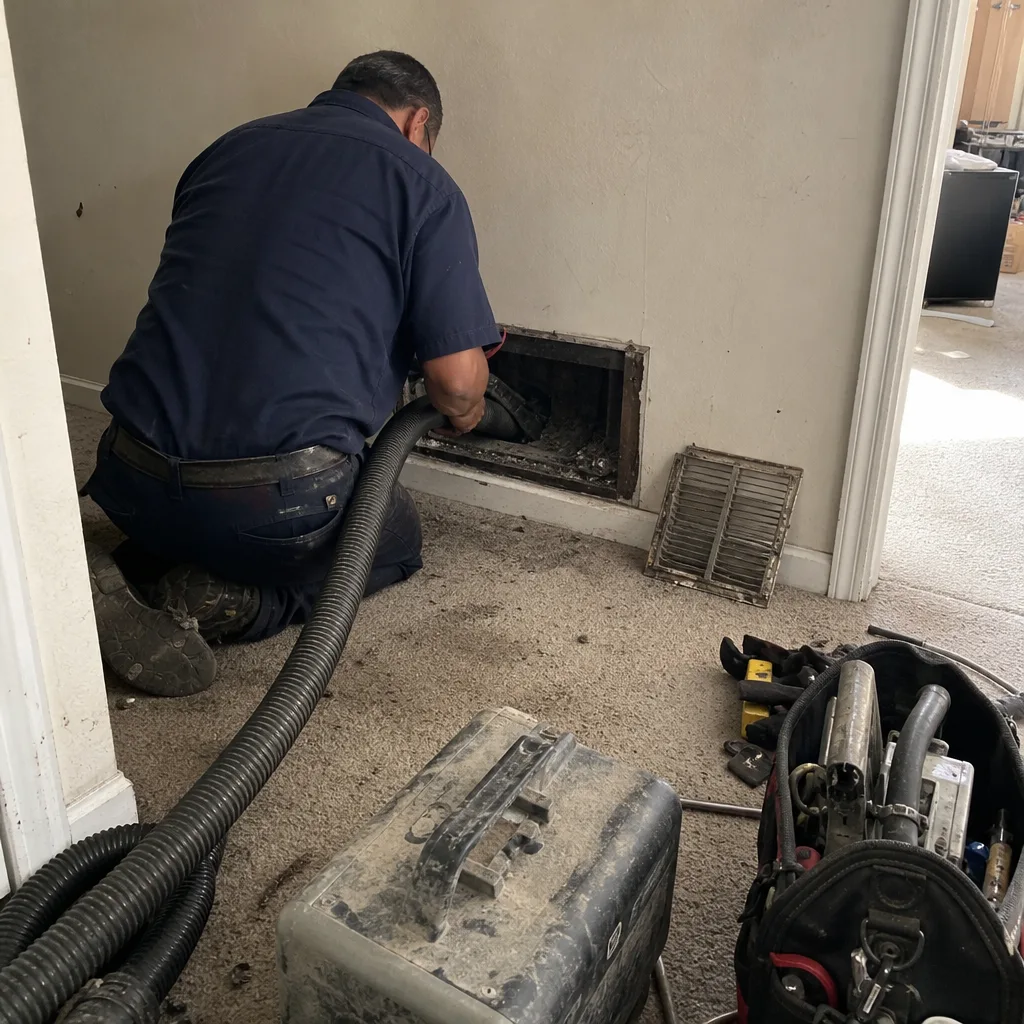
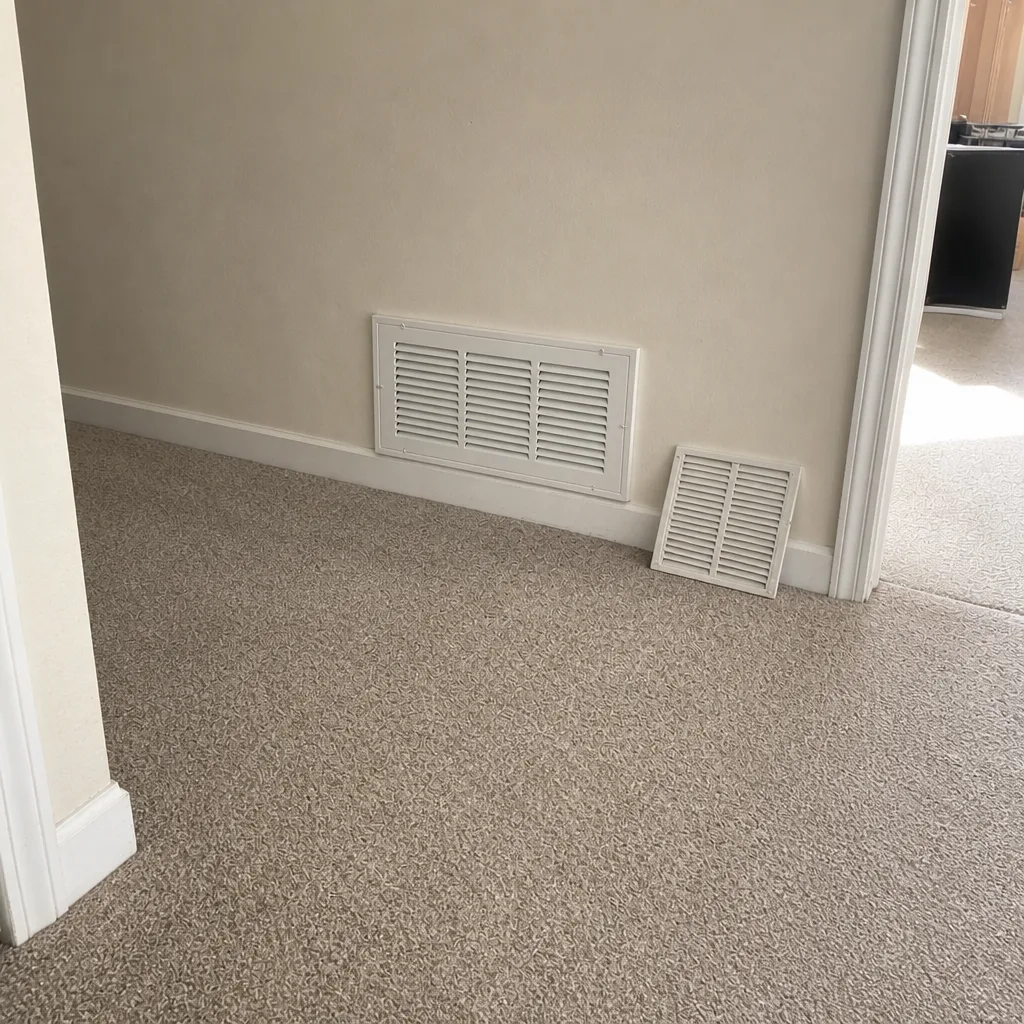
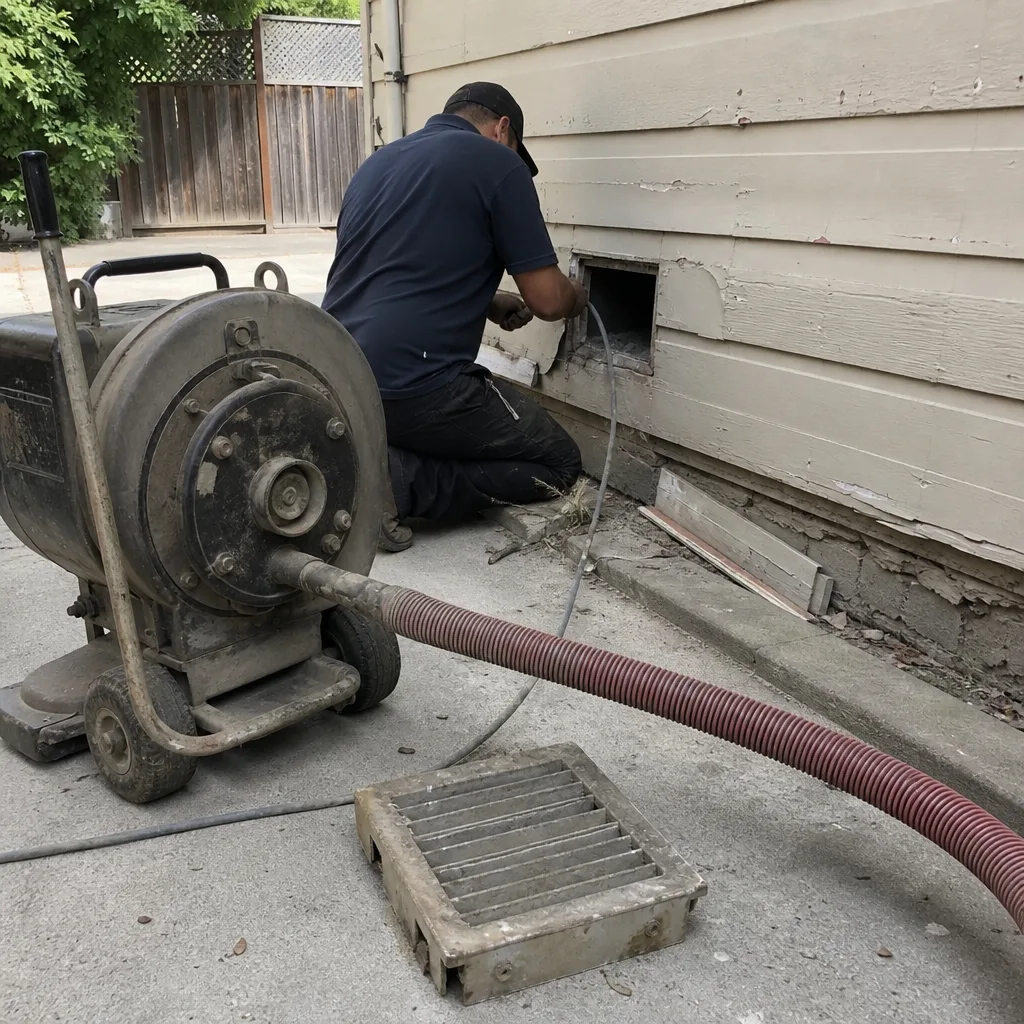
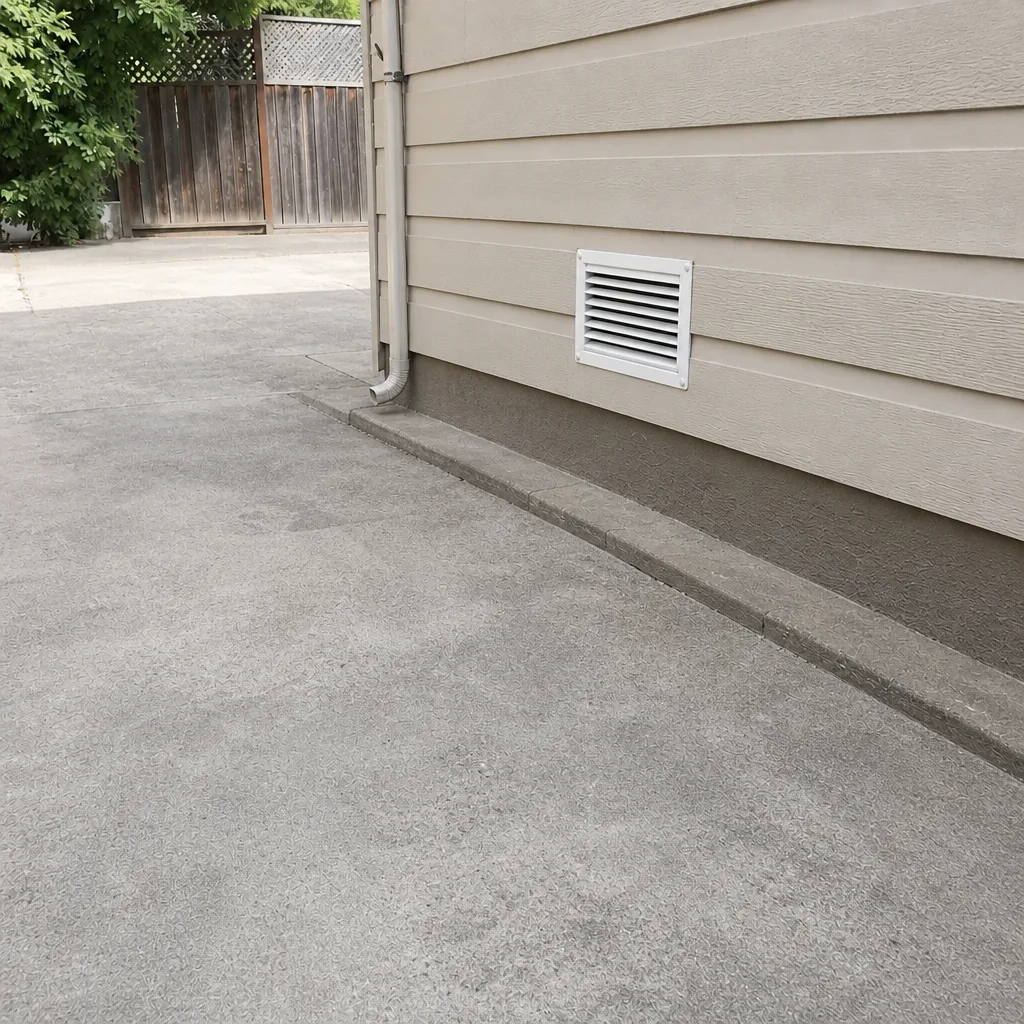
Whole-system duct and dryer vent check with before-and-after photos - you see exactly what came out of your vents
That "$99 whole-house special" is a bait ad - the real number appears once they are in your hallway, or the "clean" is a shop-vac at the register. We photograph the inside of your ducts before and after instead.
How to Hire an Air Duct Cleaning Contractor in Livermore: A Step-by-Step Guide
Most people assume anyone who shows up to clean air ducts must be licensed, trained, and answerable to some state board. In California, that assumption is wrong. The state does not issue a duct cleaning-specific license, which means a person with a van, a shop-vac, and a business card can legally start cleaning ductwork in Livermore tomorrow morning. That reality puts the entire screening burden on you, the homeowner. This guide walks through the exact questions, credentials, and equipment benchmarks you need to separate a legitimate contractor from a guy with a brush, so the air moving through your home actually gets cleaner rather than just rearranged.
Quick Answer
To hire a qualified air duct cleaning contractor in Livermore, verify general liability and workers’ comp insurance directly with the carrier, ask three equipment questions (contact-cleaning machine brand, CFM rating, containment setup), get a written whole-system quote, and confirm the company can repair duct damage it finds rather than just cleaning around it. Most Livermore homes should expect a legitimate whole-system cleaning to take 3 to 5 hours and cost several hundred dollars per system, not a flat $99 coupon rate.
Styles & brands we work with
- Whole-home duct cleaning
- Dryer vent cleaning
- Camera inspection
- Sanitizing & deodorizing
Table of Contents
- Why Licensing Won’t Protect You in California
- The Three Equipment Questions to Ask Before Booking
- How to Verify Insurance in California: Specific Steps
- How to Read a Duct Cleaning Quote: Red Flags and Real Ranges
- What a Legitimate Pre-Cleaning Inspection Looks Like
- What a Good Duct Cleaning Job Actually Looks Like
- What Livermore’s Climate Means for Duct Cleaning
- Common Mistakes to Avoid
- When to Call a Professional
- Frequently Asked Questions
Why Licensing Won’t Protect You in California
Here’s the uncomfortable truth: California’s Contractors State License Board does not recognize air duct cleaning as its own license classification. A contractor might hold a C-20 warm-air heating license, a C-61 limited specialty license, or no license at all and still legally offer duct cleaning as a service within certain scopes of work. The person at your door may show you a business card with a logo and a local phone number, but that card is not proof of competence.
This is not a reason to panic. It is a reason to be deliberate. When there’s no state licensing exam to serve as a floor, you have to create your own verification checklist. That checklist starts with understanding what credentials do exist in the industry. NADCA, the National Air Duct Cleaners Association, offers certification that requires study, testing, and adherence to published cleaning standards. A NADCA-certified contractor has met a baseline of technical knowledge about airflow, containment, and cleaning methodology.
But NADCA membership is a floor, not a ceiling. It tells you the company knows the textbook. It does not tell you whether the tech who shows up at your Livermore home is the one who passed the test, whether the equipment is maintained, or whether the company will actually follow the containment procedures they learned about. In our experience, credential-heavy companies with sloppy field practices are worse than experienced crews with minimal paperwork. You need both the credential and the equipment verification, which is why the next section matters more than any certificate on a wall.
The Three Equipment Questions to Ask Before Booking
If you only ask three questions before hiring a duct cleaning contractor in Livermore, make them these three. Each one immediately filters out the shop-vac-with-a-brush operators who dominate the low end of this market.
Question 1: What brand is your contact-cleaning machine?
There are two fundamentally different ways to clean ducts. Air-sweep methods push compressed air through the system and hope debris dislodges and travels to a collection point. Contact cleaning physically scrubs the duct walls with a rotating brush or agitation device that touches the surface. The difference matters because dust, pet dander, and debris in Livermore’s dry climate tends to adhere to duct walls rather than float loosely in the airstream. A vacuum-only setup leaves stuck-on material behind. A contact-cleaning system like Rotobrush removes it.
Ask specifically: “Do you use Rotobrush or another contact-cleaning platform, and can I see it when you arrive?” If the answer is vague, or if they describe a “high-powered vacuum system” without naming the machine, keep looking. Professional-grade contact cleaning scrubs, not just suctions. A contractor who cannot name their equipment brand probably does not own equipment you want in your home.
Question 2: What is the CFM rating on your vacuum collection system?
CFM stands for cubic feet per minute, and it measures how much air the collection unit moves. A shop-vac rated at 150 CFM cannot create the airflow needed to pull debris from a full residential duct run. Negative-air machines used by serious contractors, including units in the Nikro product line, move thousands of CFM and create a contained vacuum environment throughout the cleaning process. This matters because dislodged contaminants either get captured or they recirculate through your home. The CFM rating tells you which outcome to expect before work starts.
Question 3: What containment setup do you use during cleaning?
This is the question that separates technicians from people who just move dirt around. Proper containment means sealing off registers, creating negative pressure so dust does not escape into living spaces, and using equipment specifically designed for air-quality control during service. Equipment in the Abatement Technologies category, the same standard used in mold remediation and hazmat work, signals a commitment to keeping your home clean while cleaning your ducts. If a contractor tells you they “contain the dust with plastic sheeting” but cannot describe negative pressure or HEPA filtration, that’s a red flag. Sealed and contained is not a slogan; it is a mechanical requirement for doing this work correctly.
How to Verify Insurance in California: Specific Steps
Asking “are you insured?” is not enough. Every contractor says yes. You need to verify it, and in California the process is straightforward if you know what to ask for.
Step 1: Request a certificate of insurance (COI) directly from the contractor’s insurance carrier, not from the contractor.
A legitimate contractor will provide their carrier’s name and policy number without hesitation. You can then call that carrier or use their online verification portal to confirm the policy is active. The key detail: the COI should list you, the homeowner, as a certificate holder. This means the carrier will notify you if the policy is cancelled or lapses before or during your project.
Step 2: Verify two separate coverages: general liability and workers’ compensation.
General liability covers damage to your Livermore home if a tech accidentally damages drywall, wiring, or furnishings during cleaning. Workers’ comp covers injury to the crew. If a worker falls off a ladder in your home and the company has no workers’ comp, California law can put liability on you, the homeowner. This is not a minor technicality. Any company sending employees into your home should carry workers’ comp. Any company that refuses to show proof of both policies is not a company you want working in your crawlspace or attic.
Step 3: Check the policy dates and coverage limits.
Make sure the policy is current, not expired, and that coverage limits make sense for residential work. You do not need a million-dollar policy for a 2,000-square-foot home, but a $50,000 general liability limit does not cover much if something goes wrong. Most legitimate duct cleaning contractors carry $500,000 to $1 million in general liability. Use that range as your benchmark. The estimate itself should be free, and the price per job set by the written estimate before any work begins.
How to Read a Duct Cleaning Quote: Red Flags and Real Ranges
The way a company prices duct cleaning tells you a lot about how they operate. In the Livermore market, legitimate whole-system cleaning for an average single-family home typically falls in the range of $350 to $650, depending on the number of systems, the home’s square footage, and the level of contamination. A quote substantially below that range should trigger skepticism, not excitement.
Here is what to look for in a written quote:
- System-based pricing, not per-vent pricing. A legitimate quote prices the whole system or the whole home. Per-vent pricing creates incentives to upsell and inflate the job mid-service. One flat price per system, agreed before work starts, eliminates the bait-and-switch dynamic that plagues this industry.
- A line item for each system. If you have a furnace, an air handler in the attic, and a dryer vent, those should appear as separate line items with separate prices. A single vague “duct cleaning” line tells you nothing about what is actually included.
- No “anti-microbial fogger” upsell before inspection. A contractor who offers to fog your ducts with antimicrobial chemicals before ever looking inside them is selling you a product, not a service. Legitimate fogging and sanitizing may have a place in specific situations, but it should be recommended after inspection and justified by what the tech actually finds, not bolted onto every quote as a percentage add-on.
- Flat-rate whole-house pricing under $150. This is the classic bait-and-switch hook. The crew shows up, discovers “mold” or “contamination,” and the $99 job becomes $900 before lunch. We hear this story constantly from Livermore homeowners who called the cheapest ad they saw. A real cleaning takes hours of labor with professional equipment. That labor has a cost. If the price is too low to pay for that labor, the company is losing money on the initial visit and planning to recover it through upsells.
When you compare quotes, put them side by side and look for what is explicitly included. Does the quote mention the cleaning method? The containment procedure? The brand of equipment? A two-page quote with specific methods and line items beats a one-line email quote every time, even if the one-line quote is cheaper.
What a Legitimate Pre-Cleaning Inspection Looks Like
A serious duct cleaning contractor will want to see your system before quoting a price. That inspection is your best opportunity to evaluate the contractor, and it should look very different from a sales walkthrough disguised as one. Here is what separates the real thing.
- They look at multiple access points. A legitimate tech checks the return registers, supply registers, the air handler, the filter slot, and the plenum connections. A salesperson checks the biggest, dirtiest register they can find, shows it to you, and suggests you have a serious problem.
- They bring a camera or inspection scope. Duct walls cannot be properly inspected with a flashlight and a mirror. A tech with an inspection camera can show you the actual condition inside the trunk lines and branch runs. If they cannot show you the inside of your ducts before cleaning, how will they prove the work after cleaning?
- They measure, not guess. A legitimate technician notes the number of systems, the linear feet of ductwork, the number of registers, and the type of duct material. These measurements determine the quote. A salesperson glances at the return grill and quotes a number.
- They check the filter. Your existing HVAC filter tells a story about the system. A heavily clogged filter during the inspection means the system has been pulling dirty air. A tech who does not check the filter is not doing a real inspection.
- They offer documentation, not scare tactics. A legitimate company can show you before-and-after photos after the cleaning, not just describe what they did. Before the cleaning, they explain what they found in plain terms and let the findings speak for themselves. A salesperson talks about hidden mold, invisible allergens, and urgent health risks before a single register is opened.
In our experience, the contractors who do the most thorough inspections are also the ones who do the most thorough cleanings. The inspection is a window into how the whole job will go.
What a Good Duct Cleaning Job Actually Looks Like
You have hired the contractor. The crew shows up. Now what should you expect to see? A professional air duct cleaning follows a predictable sequence, and watching for it protects you from paying for work that never happened.
Equipment, not just hoses. The crew should roll up with a negative-air machine, not just a vacuum hose running to a truck. The negative-air unit, like those in the Nikro line, gets set up at a strategic access point and runs throughout the cleaning to keep the system under negative pressure. If you see only a hose and a brush, ask where the containment unit is.
Register sealing, not just register removal. In a proper cleaning, most registers are sealed off with temporary covers so airflow is directed through the section being cleaned. The tech cleans section by section, agitating the duct walls with a contact-cleaning brush, then pulling loosened debris back to the negative-air collection point. If every register is open and the tech is just running a brush around, the debris is being stirred up, not captured.
Before-and-after photos. Any competent contractor can show you the inside of your ducts after cleaning. Ask to see the after photos, specifically of the trunk lines and return plenum, the areas where debris collects. A company that cannot produce these photos either does not have the camera equipment or does not want you to see the condition of the ducts they just cleaned. Either way, that is a problem.
Repair capability, not just cleaning. Duct cleaning sometimes reveals damage: a separated joint, a crushed run, a torn flex duct. A company that only cleans will either ignore what they found or tell you to call someone else. A company with in-house air duct repair capability can fix the problem while they are there, restoring the system to proper airflow rather than just making it clean. Restore, not just clean, is the difference between a one-task crew and a full-scope contractor.
What Livermore’s Climate Means for Duct Cleaning
Livermore’s climate shapes what accumulates in your ductwork and how often it needs attention. We have hot, dry summers where HVAC systems run hard, kicking up dust that settles when the system cycles off. We have mild winters where systems may run less but where closed windows mean whatever is in the ducts keeps recirculating. The valley’s dry air keeps debris lightweight and dusty rather than damp and matted, which means it takes less mechanical effort to dislodge but more airflow to capture effectively.
That combination, dry and dusty, means contact cleaning matters more here than in humid climates where debris sticks together. A rotating brush against the duct wall breaks the electrostatic bond that holds fine dust to metal. Air-sweep methods alone often fail to get it all. The dust also means filters load up faster in Livermore homes than in coastal areas. A tech who understands this local pattern will check your filter during inspection and discuss replacement schedules based on how much debris your specific system is collecting.
For property managers handling tenant turnover in Livermore, this also means documented duct cleaning between tenants has real value. A system that has sat through a hot summer while a home was vacant needs more than a quick vacuum pass. It needs the full contact-cleaning treatment with containment, and it needs photos proving the work was done. Your next tenant is breathing that air from day one. Our Duct Cleaning Livermore team routinely sees the difference between systems cleaned properly between tenants and systems that were “cleaned” by a handyman with a shop-vac. The photos tell the story.
Common Mistakes to Avoid
- Hiring based on a coupon or a single low quote. Duct cleaning is not a commodity. A $99 whole-house special means either the job will not actually clean your ducts or the final invoice will be far higher than the coupon price. Either way, you lose.
- Accepting an insurance answer without verifying the policy. “Yeah, we’re insured” is not verification. Call the carrier. Check the dates. Confirm both general liability and workers’ comp. A company that balks at this request is hiding something.
- Allowing a contractor to fog or sanitize before inspecting. Any chemical treatment should follow an inspection and be justified by what was actually found. A pre-inspection fogger upsell is a sales tactic, not a service.
- Paying for per-vent pricing. This pricing model incentivizes inflation. Insist on whole-system pricing with a written estimate before work starts.
- Skipping the after-photos. If the contractor cannot show you what the inside of your ducts looked like after cleaning, you have no proof the work was done. Ask for before-and-after documentation on every job.
- Ignoring the dryer vent. Many homeowners think of duct cleaning and dryer vent cleaning as separate services, but they are mechanically related and both affect air quality and fire risk. A company that does both dryer vent cleaning and duct cleaning as distinct services can handle the full scope. A company that treats the dryer vent as a freebie add-on probably is not cleaning either one properly.
- Hiring a company that cannot repair what it finds. If the tech finds a disconnected duct run and cannot fix it, you now have a clean system that still leaks air. In-house repair capability turns a cleaning visit into a complete system restoration.
When to Call a Professional
Some situations clearly call for a professional duct cleaning contractor rather than a wait-and-see approach. If you have recently completed a remodel, drywall dust and construction debris have almost certainly made their way into your duct system, and no amount of normal HVAC operation will remove it. If you notice musty odors coming from your registers whenever the system runs, that smell is moving air through something that should not be there. If your filters are clogging faster than usual, or if you see visible dust accumulating on surfaces within days of cleaning, the ducts themselves may be the source. If someone in your Livermore home has unexplained allergy symptoms that improve away from home and worsen when the HVAC runs, the indoor air stream deserves a hard look. Any of these signs justifies a professional inspection with real equipment, not a guess. Duct Cleaning Livermore offers free estimates in Livermore – call (833) 593-6464 to schedule one.
Frequently Asked Questions
A legitimate whole-system air duct cleaning in Livermore typically costs between $350 and $650 for an average single-family home, depending on the number of systems, home size, and contamination level. Be suspicious of quotes far below that range; flat-rate pricing under $150 is almost always a bait-and-switch tactic. Call (833) 593-6464 for an exact quote – estimates are free.
Verify three things: insurance (general liability and workers’ comp, confirmed directly with the carrier), equipment (a named contact-cleaning machine like Rotobrush and a negative-air containment unit), and inspection process (a real pre-cleaning inspection with a camera, not a quick look at one dirty register). NADCA certification is a useful floor but not a substitute for equipment and insurance verification.
Cheaper quotes usually reflect cheaper equipment, no containment procedure, or a business model built on upsells rather than the actual cleaning. A shop-vac and brush costs nothing compared to a Rotobrush contact-cleaning system and Nikro negative-air unit, and that equipment cost difference shows up in the quote. The cheapest quote often becomes the most expensive in the end.
Ask for before-and-after photos of the inside of your ductwork, specifically the trunk lines and return plenum. A contractor with an inspection camera can show you exactly what the ducts looked like before and after cleaning. If a company cannot produce after-photos, treat the work as unverified.
Yes, and the dry climate actually makes it more important. Livermore’s hot summers run HVAC systems hard and generate fine dust that electrostatically bonds to duct walls. The dry air keeps debris loose rather than matted, which requires mechanical agitation (contact cleaning) to remove, not just vacuuming. If you are seeing dust accumulate quickly or noticing allergy symptoms when the system runs, the ducts are the likely source.
Air duct cleaning focuses on the HVAC distribution system, the supply and return ducts that move conditioned air through your home. Dryer vent cleaning focuses on the exhaust duct running from your clothes dryer to the outside, removing lint that accumulates and creates a fire hazard. Both services are important and related, but they use different techniques and should be quoted as separate line items.
The Bottom Line
Hiring an air duct cleaning contractor in Livermore comes down to verification: verify the insurance, verify the equipment, verify the method. With no state duct cleaning license to protect you, those verifications are entirely on your shoulders. Ask about contact cleaning versus air-sweep, insist on a negative-air containment setup, and demand before-and-after photos. Reject per-vent pricing and ultra-low flat rates. A legitimate contractor in Livermore will answer every technical question directly, provide a written whole-system estimate, and show you the inside of your ducts before and after the work. That is what separates professional-grade equipment with residential-level attention from a guy with a brush. Air you can trust starts with a contractor you have actually verified.
Written by the team at Duct Cleaning Livermore, serving Livermore since 2015.
See the difference
 Before
 After
 Before
 After
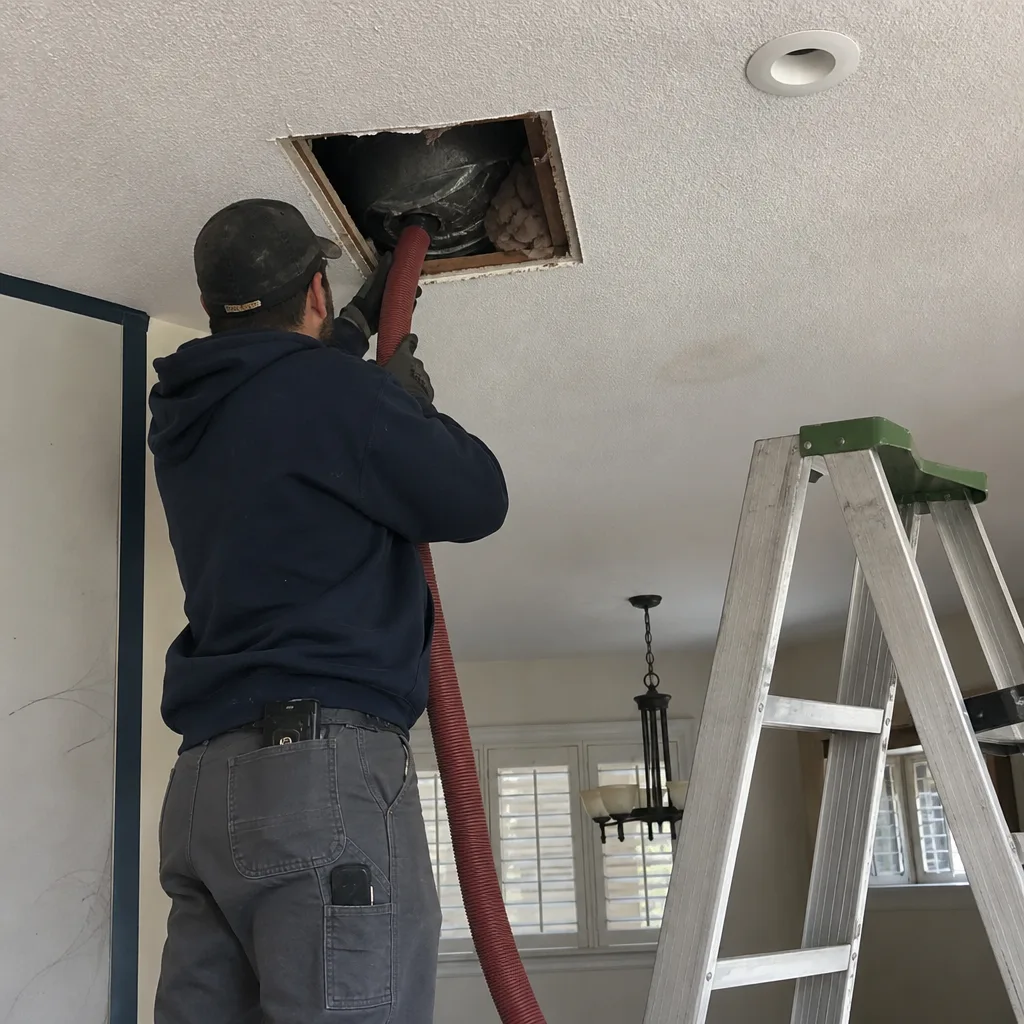 Before
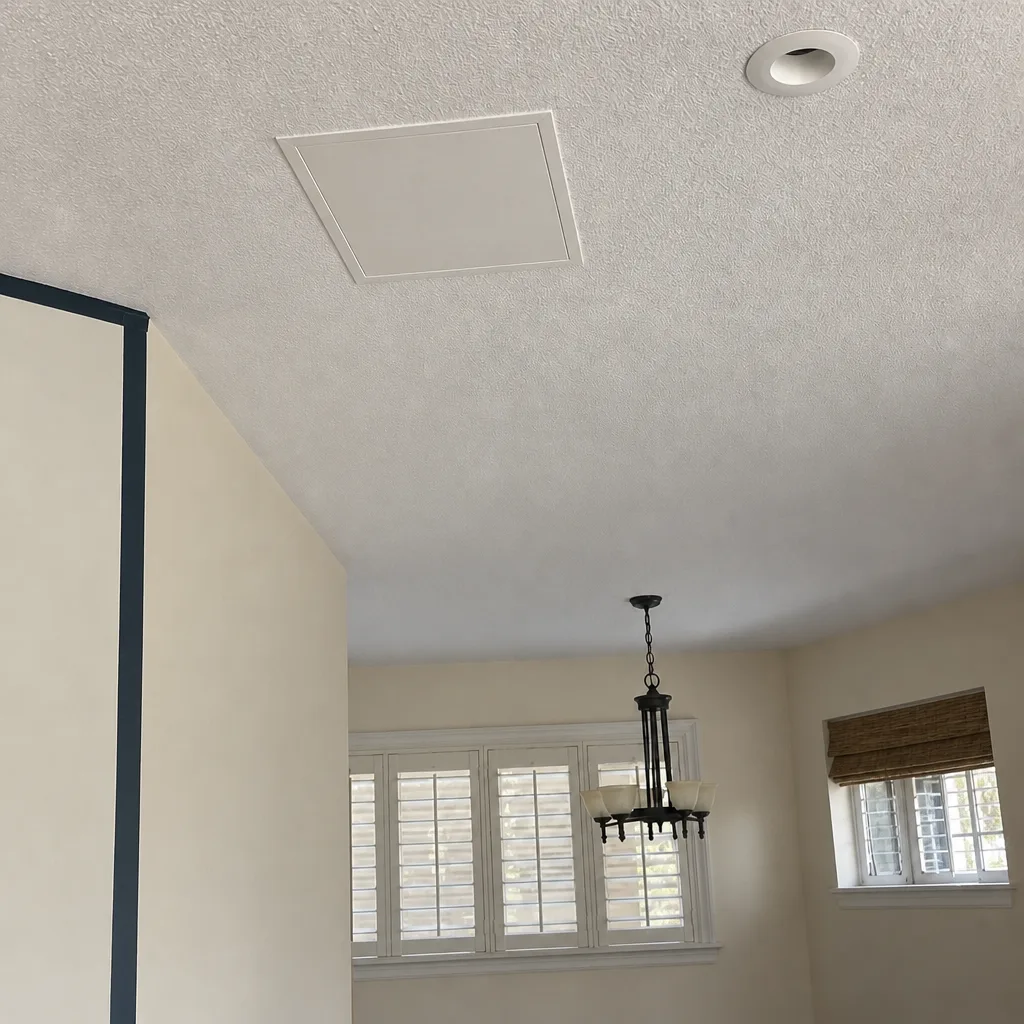 After