
Last updated November 4, 2026
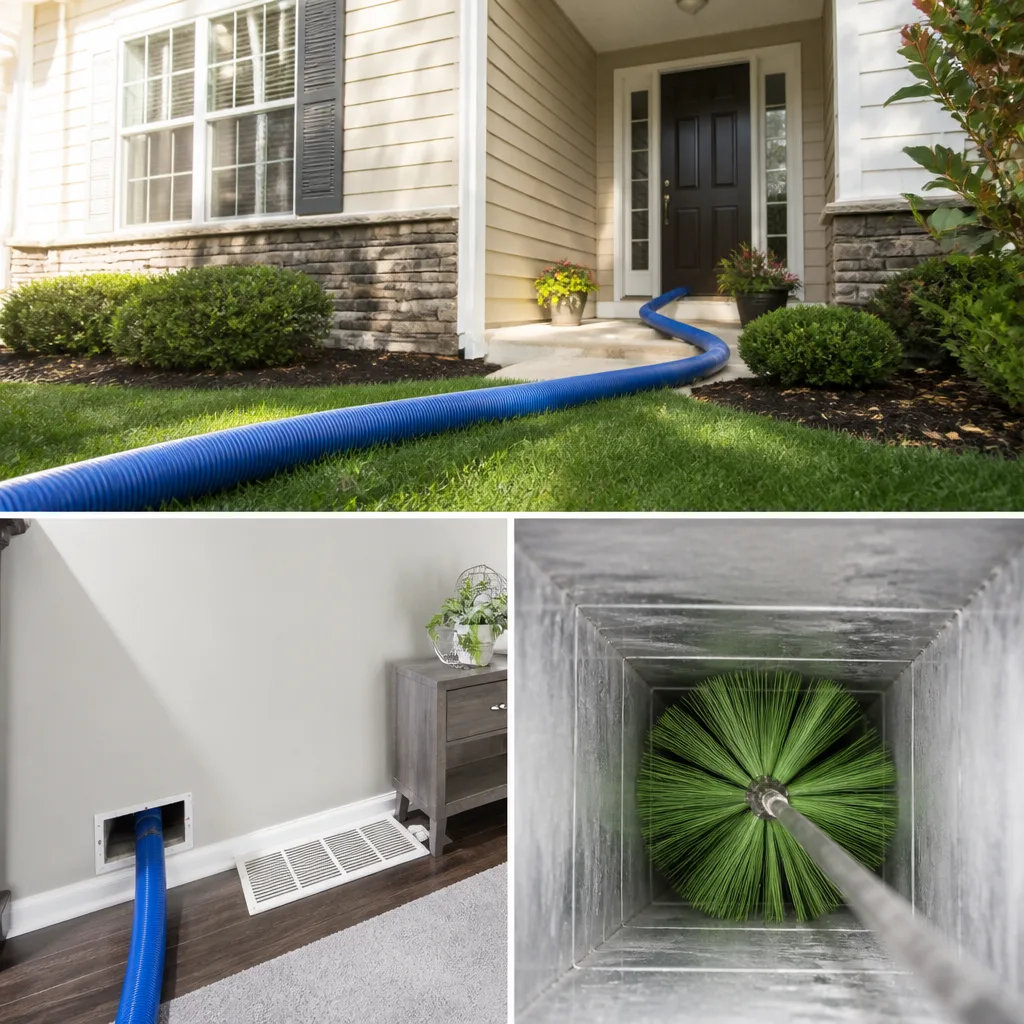 Whole-home duct cleaning
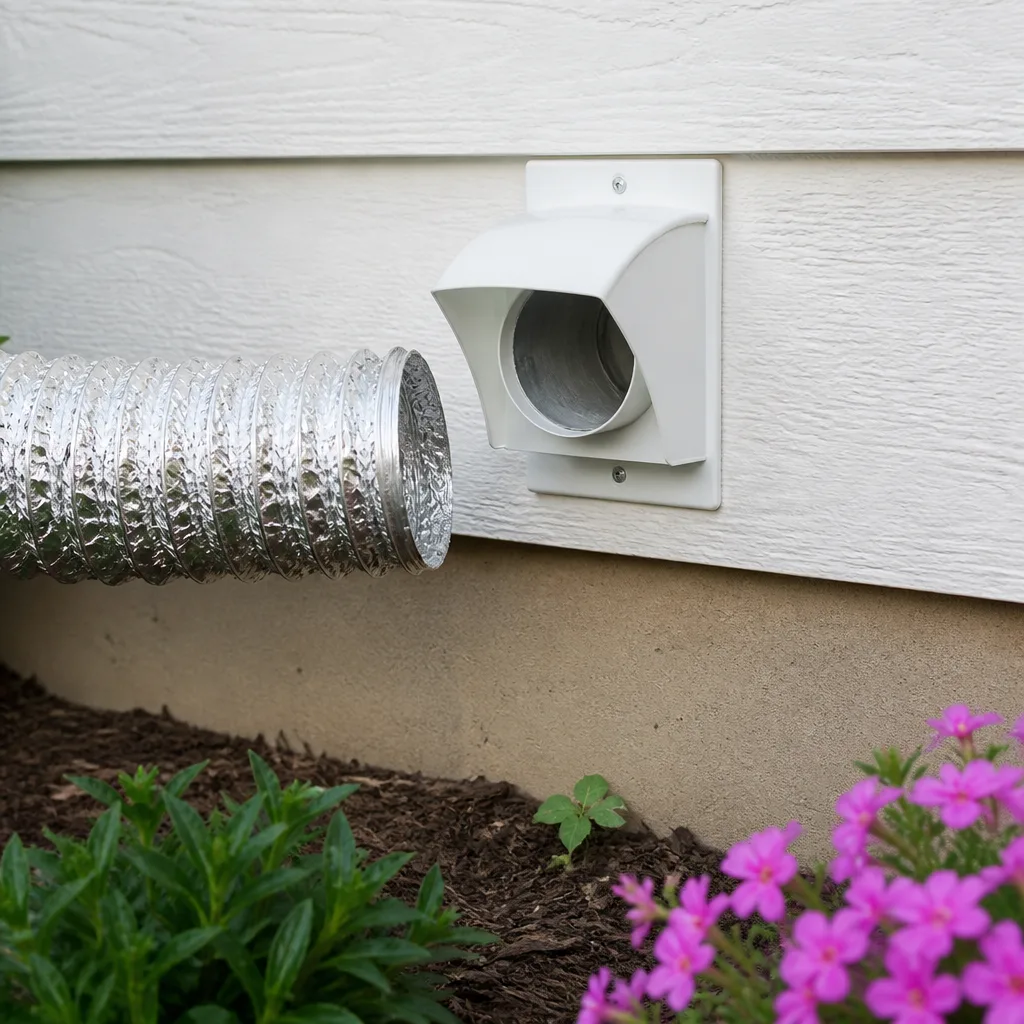 Dryer vent cleaning
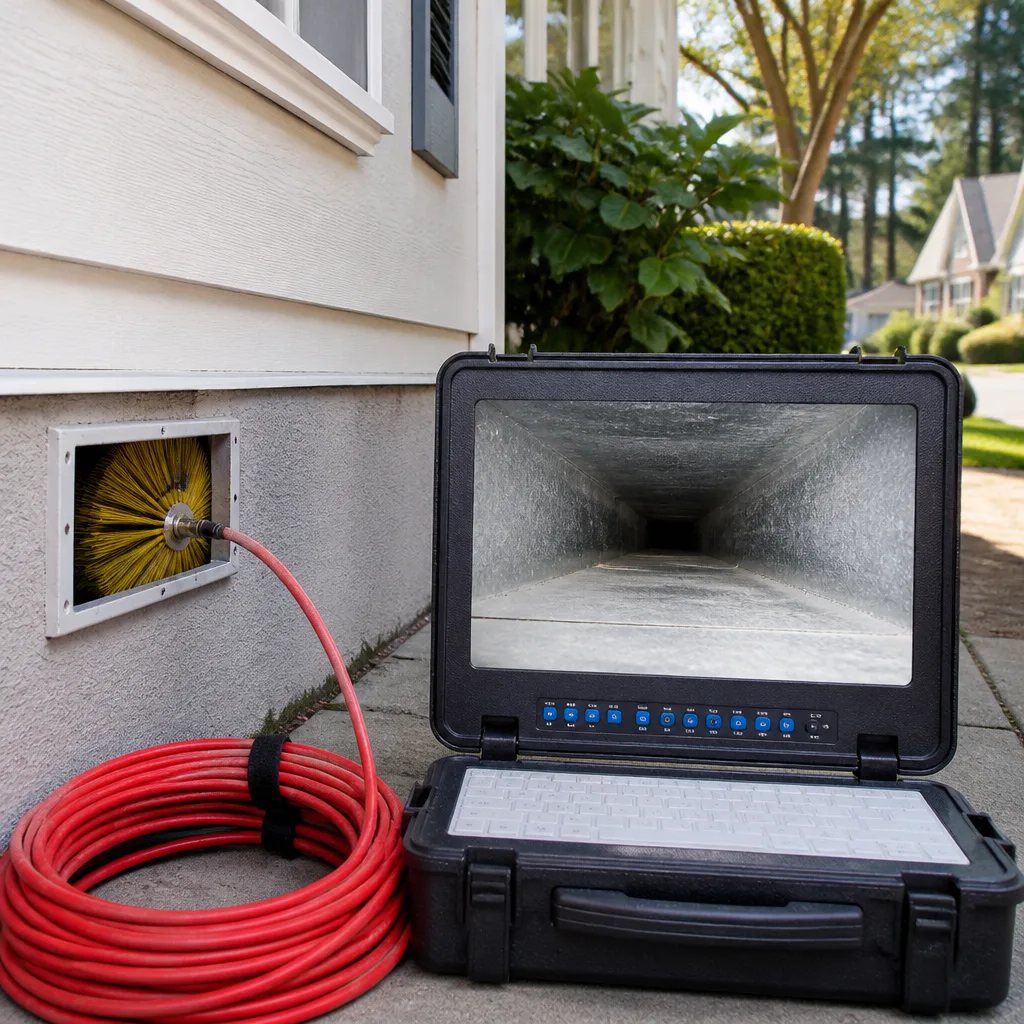 Camera inspection
 Sanitizing & deodorizing
Whole-system duct and dryer vent check with before-and-after photos - you see exactly what came out of your vents
That "$99 whole-house special" is a bait ad - the real number appears once they are in your hallway, or the "clean" is a shop-vac at the register. We photograph the inside of your ducts before and after instead.
Seasonal Air Duct Cleaning Care for Livermore: Year-Round Homeowner’s Guide
Most national duct-cleaning guides treat the whole country like it has one climate: cold winters, hot summers, clean in spring and fall. Livermore doesn’t work that way. Our valley heat spikes hard in summer, Tule fog settles in for weeks each winter, and wildfire smoke can sit over the Tri-Valley in early fall. Each of those local weather patterns stresses ducts differently, and the maintenance calendar should follow those conditions rather than calendar dates. This guide explains what actually happens inside Livermore ductwork through all four seasons, month by month, and what a homeowner can do about it without chasing a national one-size-fits-all schedule.
Quick Answer
In Livermore, the practical schedule is: inspect and clean after wildfire-smoke season (usually late October to November), check return grilles and filters monthly during peak AC months (July through September), watch for moisture and musty odors during Tule fog season (December through February), and do any full-system duct cleaning in spring (March through May) before the first heat wave loads the system with new debris. Duct cleaning itself is not a monthly task – most Livermore homes need it every 3 to 5 years, but the seasonal checks around it are what keep the system healthy between cleanings.
Styles & brands we work with
- Whole-home duct cleaning
- Dryer vent cleaning
- Camera inspection
- Sanitizing & deodorizing
Table of Contents
- Why Livermore’s Climate Is Different for Ducts
- Summer: Thermal Expansion, Condensate, and Filter Loading
- Fall: Wildfire Smoke and the Pre-Heating Inspection Window
- Winter: Tule Fog, Humidity, and Return Leaks
- Spring: Pollen, Post-Heating Debris, and the Cleaning Window
- A 12-Month Livermore Duct Maintenance Calendar
- Why Equipment and Method Change the Result
- When Ducts Need Repair, Not Just Cleaning
Why Livermore’s Climate Is Different for Ducts
Livermore sits at the eastern edge of the Bay Area, in a valley that traps heat. Summer days regularly cross 100°F, and in 2022 the city recorded 42 days above 95°F. That sustained heat does something most guides never discuss: it expands and contracts flex duct connections. The flexible collars and zip ties that join sections of round duct to trunk lines soften in attic heat, which can run 130°F or higher in July and August. Over repeated cycles, that expansion opens small gaps at the joints. A gap of even a quarter-inch lets conditioned air escape into the attic and pulls dust and insulation fibers into the airstream. We see this pattern in Duct Cleaning Livermore homes every summer – joints that were tight in May are loose by September.
Then winter arrives and brings the opposite problem. Livermore’s Tule fog settles into the valley from December through February, often for days at a time. The relative humidity climbs, and moist air finds every small opening in the return side of the duct system. Return ducts in crawlspaces or unconditioned attics pull that damp air in, and condensation forms on the inside of the metal. Dust that settled in the ducts over summer absorbs that moisture and becomes a paste. That’s the musty odor many Livermore homeowners notice in early winter – not a leak in the roof, but a duct system absorbing valley humidity through leaks that didn’t matter in dry October.
This is why the national spring-and-fall cleaning model doesn’t fit here. Livermore’s seasons each create a distinct stress on the system, and the maintenance calendar should match them.
Summer: Thermal Expansion, Condensate, and Filter Loading
Summer is when Livermore duct systems work hardest. The AC runs for hours every day from June through September, and that runtime creates three specific issues.
First is thermal stress on flex duct. As mentioned above, attic heat softens and expands the materials. Over a single summer, connections that were installed correctly can loosen enough to leak. We recommend a visual check of accessible duct connections in May, before the heat arrives, and again in September if the system has been running heavily. You don’t need to climb into the attic for this – a technician can check it during a cleaning or inspection.
Second is cooling coil condensate. The evaporator coil removes moisture from the air as it cools, and that water drains away through a condensate line. In Livermore’s dry summer air, the coil actually produces less condensate than in humid climates, but the coil still runs wet for hours each day. The drain pan and line should stay clear. If the drain clogs, water backs up into the coil cabinet, where dust collected on the coil becomes damp. That’s a breeding ground for biological growth that then circulates into the living space. The coil needs to be clean for this to work properly, and coil cleaning is part of a proper duct cleaning job when the coil is accessible.
Third is filter loading. High AC runtime means more air moves through the filter, and a filter that lasts two months in spring may load up in three weeks in August. A loaded filter restricts airflow, which makes the system work harder and can pull air through any small leak in the return side instead of through the grille. For Livermore summers, check the filter monthly from July through September and replace it whenever it looks dirty. This is not a duct cleaning issue by itself, but it directly affects how much debris ends up in the ducts.
Summer Checklist for Livermore
- Check the filter monthly during July, August, and September; replace when visibly loaded.
- Listen for whistling or hissing at return grilles, which can indicate a restrictive filter pulling air through leaks.
- Check the condensate drain line for slow draining or standing water near the indoor unit.
- If you notice uneven cooling between rooms, it can be a sign of duct leakage that opened during the heat.
- Schedule any duct inspection or cleaning before the worst heat arrives, not during the middle of a heat wave.
Fall: Wildfire Smoke and the Pre-Heating Inspection Window
Fall in Livermore is wildfire season in the broader region. Smoke from fires in the Sierra foothills, the North Bay, or even farther away can drift into the Tri-Valley and sit for days. When smoke is present, many homeowners run their HVAC fan continuously to keep air moving through the filter, and that’s generally a reasonable approach. But the smoke itself doesn’t only load the filter. Fine particulate matter settles inside the return ducts, especially in the first few feet after the filter. Over repeated smoke events, that layer builds up.
The practical timing in Livermore is this: if the region had significant smoke events in September or October, the best window for duct cleaning is late October through November, after the air clears but before the heating season starts in earnest. Cleaning before the smoke clears means the system pulls new smoke in during the cleaning. Cleaning after heating season starts means the furnace is already moving air through the accumulated soot layer and distributing it into the house.
There’s also a system-specific factor most guides miss: outdoor air dampers, sometimes called economizers. These are common on newer Livermore homes with energy-recovery ventilators or whole-house fans. When outdoor air quality drops, an outdoor air damper that stays open pulls smoke directly into the return side. If you have a system with an outdoor air intake, check the damper during smoke events and close it if the system allows manual control. For homes without outdoor air dampers, the main smoke entry path is simply air leakage around windows and doors, and the HVAC filter is the first line of defense. Use a high-MERV filter during smoke season if your system can handle the pressure drop, and then have the ducts checked after the smoke passes.
Winter: Tule Fog, Humidity, and Return Leaks
Livermore winters are mild by most standards, but they’re not dry. Tule fog forms in the Central Valley and spills into the Tri-Valley, sometimes lingering for a week or more. That fog holds relative humidity high, often 80% to 90%, while daytime temperatures stay in the 40s and 50s. Metal surfaces in unconditioned spaces – attics and crawlspaces – run cold. When humid outside air meets those cold metal duct surfaces, condensation forms.
The problem is most acute on the return side. Return ducts run at negative pressure, meaning they pull air in through any gap or leak. In a crawlspace or attic, that pulled-in air carries whatever moisture is present. During fog events, that’s a lot. The condensation collects dust inside the duct, and the damp dust becomes a substrate for biological growth. The smell a homeowner notices in winter is often this process happening inside the return ducts, not a visible water leak anywhere in the house.
There’s also a simple check any homeowner can do: look for condensation on visible duct surfaces. In a crawlspace or open attic, run your hand along the outside of a metal duct on a foggy morning. If it feels damp, the duct surface temperature is below the dew point, and the inside is likely condensing too. That’s a sign to have the system inspected for return-side leaks. Sealing those leaks is a repair task, and it’s part of what air duct cleaning providers with repair capability should assess during a winter service call.
One more winter-specific point: heating season is when any debris that settled during the year gets baked onto duct walls. The furnace runs at higher temperatures, and the air moving through the system is drier. Dust that was loose in November can become caked by February. That’s why the post-smoke-season cleaning in late fall matters – it removes material before it has a full heating season to bake in place.
Spring: Pollen, Post-Heating Debris, and the Cleaning Window
Spring in Livermore is the transition season, and for duct maintenance it’s the reset point. By March, the heating system has run for several months, and whatever was in the ducts has been dried, circulated, and redistributed. The return grilles are typically loaded with a mix of dust, pet hair, and skin cells. Pollen season starts in the valley and foothills around March and runs through May, and pollen enters the system through the same return grilles if the filter isn’t catching it all.
The spring window – roughly March through May – is often the best time for a full-system duct cleaning in Livermore. Here’s the reasoning. By late March, the winter moisture cycle has ended. The ducts have dried out, but the dust and debris that absorbed all that Tule fog moisture is still there. Cleaning in spring removes that material before the summer heat starts cycling the system at full load. It also gets the system clean before pollen season peaks, which matters for anyone in the household with seasonal allergies. More than any other time of year, this is the window we recommend for homeowners who have been putting it off.
But there’s a related spring task that often gets overlooked: return grille cleaning. The grilles themselves – the metal or plastic covers over the return openings – collect a visible layer of dust and pollen. It’s a simple weekly wipe-down during peak pollen season, and it reduces the load on the filter. It also makes airborne pollen visible, which helps homeowners understand when the pollen count is high and when windows should stay closed. Livermore’s valley location means pollen from the foothills tends to concentrate in the valley air basin rather than blowing away quickly.
Why Spring Beats Fall for Full-System Cleaning in Livermore
- Post-winter drying is complete. The Tule fog season has ended, and ducts have had time to dry, making trapped debris easier to remove mechanically.
- Pre-summer load. The system gets clean before it faces the highest airflow demand of the year, from June through September.
- Pollen season is manageable. Cleaning before peak pollen means the system starts the allergy season clean rather than fighting an existing dust load.
- Odor issues from winter condensation are resolved. Any musty smell that developed during fog season gets physically removed, not masked.
- Repair findings have time to be scheduled. If the cleaning exposes duct damage, the repair can happen before summer rather than during a heat wave.
A 12-Month Livermore Duct Maintenance Calendar
The following calendar is built for Livermore conditions, not a generic national schedule. It’s designed for a homeowner who wants a practical, month-by-month reference. Most months have one simple action, and the whole thing takes less than two hours of total homeowner time per year.
- January: Check for musty odors. With Tule fog at its peak, any smell coming from the vents indicates moisture in the ducts. Also check that the condensate line from the furnace (if it’s a high-efficiency unit) is draining.
- February: Inspect the filter. It’s been running all winter and may be loaded. Look at return grilles for visible dust accumulation and vacuum them if needed.
- March: This is the start of the optimal cleaning window. Schedule a full-system inspection if it’s been more than 3 years since the last cleaning. Wipe down return grilles to catch early pollen.
- April: Peak pollen month. Keep windows closed on high-pollen days and check the filter every two weeks. Consider upgrading to a higher-MERV filter if allergies are a problem, but confirm the system can handle the added pressure drop.
- May: Finish any planned duct cleaning before the heat arrives. This is also the time to check accessible duct connections for gaps that opened over the previous summer and haven’t been addressed.
- June: First heat wave. Switch to monthly filter checks. Listen for new hissing or whistling sounds at return grilles, which can indicate a connection has loosened.
- July: Peak AC month. Check the condensate drain once. Feel the air at the supply vents – if some rooms are noticeably warmer, it may be a duct leak rather than a system sizing issue.
- August: Second full month of heavy AC runtime. Replace the filter if it’s been more than 30 days. This is the month when thermal expansion issues from June and July show up as visible gaps or loose connections.
- September: End of peak heat. If the system hasn’t been inspected since spring, consider a visual check. Start watching regional air quality reports; wildfire smoke can arrive here quickly.
- October: Wildfire smoke month. If smoke events occurred, check the filter more frequently. If you have an outdoor air damper or economizer, verify it’s closing properly when outdoor air is smoky.
- November: Post-smoke season. If the region had significant smoke in September or October, this is the secondary duct cleaning window. Clean before the heating season runs at full load.
- December: Heating season is fully underway. Tule fog may begin. Check for condensation on visible duct surfaces in the crawlspace or attic on foggy mornings. Address any leaks found before the fog season deepens.
Why Equipment and Method Change the Result
Not all duct cleaning is the same job. The method matters more than the marketing. Most residential duct cleaners in the area use a truck-mounted vacuum connected to the duct system, which pulls a negative pressure through the ducts while brushes or air whips loosen debris. That’s a legitimate approach, but it has a limitation that matters in Livermore’s climate: it’s designed to remove loose, suspended debris. It doesn’t reliably remove debris that has adhered to the duct walls.
Debris adhesion is exactly what local conditions create. Summer heat cycles bake dust onto the interior surfaces of flex duct. Winter Tule fog cycles wet that dust and then dry it into a crust. By spring, the layer inside a Livermore duct that hasn’t been cleaned in years is often adhered, not loose. A vacuum-only approach leaves it in place. Contact cleaning – physically scrubbing the duct walls – removes it. That’s what Rotobrush contact cleaning is designed to do. The rotating brush head contacts the duct surface and abrades the adhered layer, while the vacuum captures what the brush dislodges. For a Livermore home that’s gone several years between cleanings, the difference is visible in the before-and-after photos: a contact-cleaned duct shows clean metal or plastic, not a patchy layer of remaining dust.
Containment is the other differentiator. During cleaning, dislodged debris has to go somewhere. A system that relies only on a vacuum at one end can let some of that debris circulate through the living space, especially if the vacuum isn’t powerful enough to overcome the system’s total static pressure. Negative-air equipment – the category that Nikro negative-air machines belong to – creates a sealed vacuum environment during the cleaning process. The same principle is used in mold remediation and hazmat work, where preventing cross-contamination is a safety requirement. For a Livermore homeowner with allergies or respiratory conditions, containment isn’t a luxury; it’s the point of the work. Abatement Technologies air-quality control equipment falls into the same category, and it’s the standard that separates professional remediation-grade work from a truck with a vacuum hose.
Compatibility with premium IAQ brands also matters for the full picture. Homes with Aprilaire filtration, Guardsman filters, or Honeywell air-treatment systems need a duct cleaner who understands how the whole chain works – the ductwork, the filter, the coil, and the controls. A technician who only knows ducts can clean the ducts and still leave the system underperforming because the filter housing, coil, or damper is the actual bottleneck. The full assessment matters.
When Ducts Need Repair, Not Just Cleaning
Cleaning removes debris. Repair restores the system to proper function. In Livermore’s thermal-cycling climate, the two often go together. A duct system that has been leaking all summer doesn’t just need cleaning; the leaks need sealing. A return duct that pulled in Tule fog moisture all winter doesn’t just need the musty smell cleaned out; the moisture entry point needs to be closed.
Here’s the practical list of scenarios where cleaning alone won’t solve the problem:
- Visible gaps at flex duct connections. These need to be re-secured and sealed. Cleaning won’t close a gap, and a gap means the system will just re-contaminate itself.
- Condensation on duct surfaces during fog season. This indicates the duct is below the dew point and likely leaking air. The leak needs sealing, not just a wipe-down.
- Crushed or collapsed flex duct. Thermal cycling can accelerate sagging, and a crushed section restricts airflow. It needs replacement or repair.
- Damaged insulation on ducts. Exposed metal in an attic or crawlspace sweats more readily. The insulation needs repair, not a cleaning pass.
- Disconnected return grilles or boots. If the connection between the grille and the duct has separated, air bypasses the filter entirely. That’s a repair, and it’s also a direct indoor air quality issue.
This is where dryer vent cleaning and duct repair capability matter together. A company that only cleans leaves the homeowner to find a separate contractor for the repair. A company that handles cleaning and repair in-house can identify the problem during the cleaning and fix it on the same visit, without a second scheduling cycle and a second estimate. That’s the difference between a cleaning service and a duct system specialist.
Common Mistakes to Avoid
- Following a generic spring-and-fall schedule. In Livermore, the cleaning windows are late fall (post-smoke) and spring (post-fog). Cleaning in June, right before the peak heat arrives, means the system gets immediately loaded with summer debris rather than starting clean.
- Running the AC during a wildfire smoke event with a cheap filter. A low-MERV fiberglass filter catches almost none of the fine particulate matter in smoke. The smoke particulate passes through and deposits inside the ducts, where it stays until the next cleaning.
- Ignoring a musty smell in December or January. It’s easy to dismiss as a winter smell, but in Livermore’s Tule fog season, a musty HVAC smell typically means condensation is happening inside the ducts. Waiting until spring lets the biological growth spread further.
- Treating a hissing return grille as normal. That sound is air being pulled through a gap because the filter is too restrictive or the return side is undersized. It’s a sign the system is pulling unfiltered air through leaks, not a minor annoyance.
- Assuming a duct cleaning will solve uneven room temperatures. Uneven temperatures are usually a leakage or balancing problem, not a cleanliness problem. Cleaning helps airflow slightly, but a real imbalance needs a repair and balancing assessment.
- Using a duct cleaner who only vacuums. Adhered debris from heat-cycled summers and fog-cycled winters won’t come out with suction alone. Contact cleaning is the method that actually removes the bonded layer.
- Skipping the return grilles during routine housekeeping. The return grilles are the entry point for everything in the air. A loaded grille means the system pulls less air from the room and more from leaks, which compounds the leakage problem.
See the difference
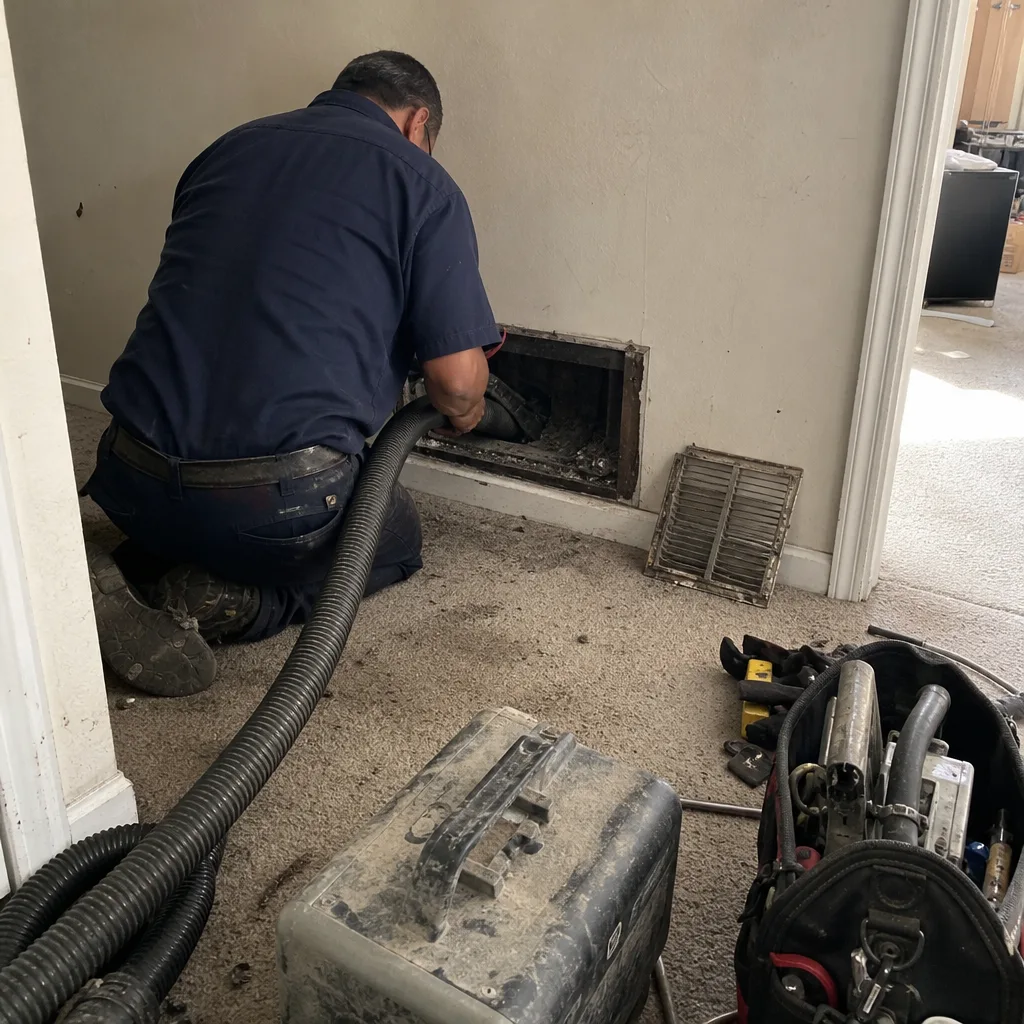 Before
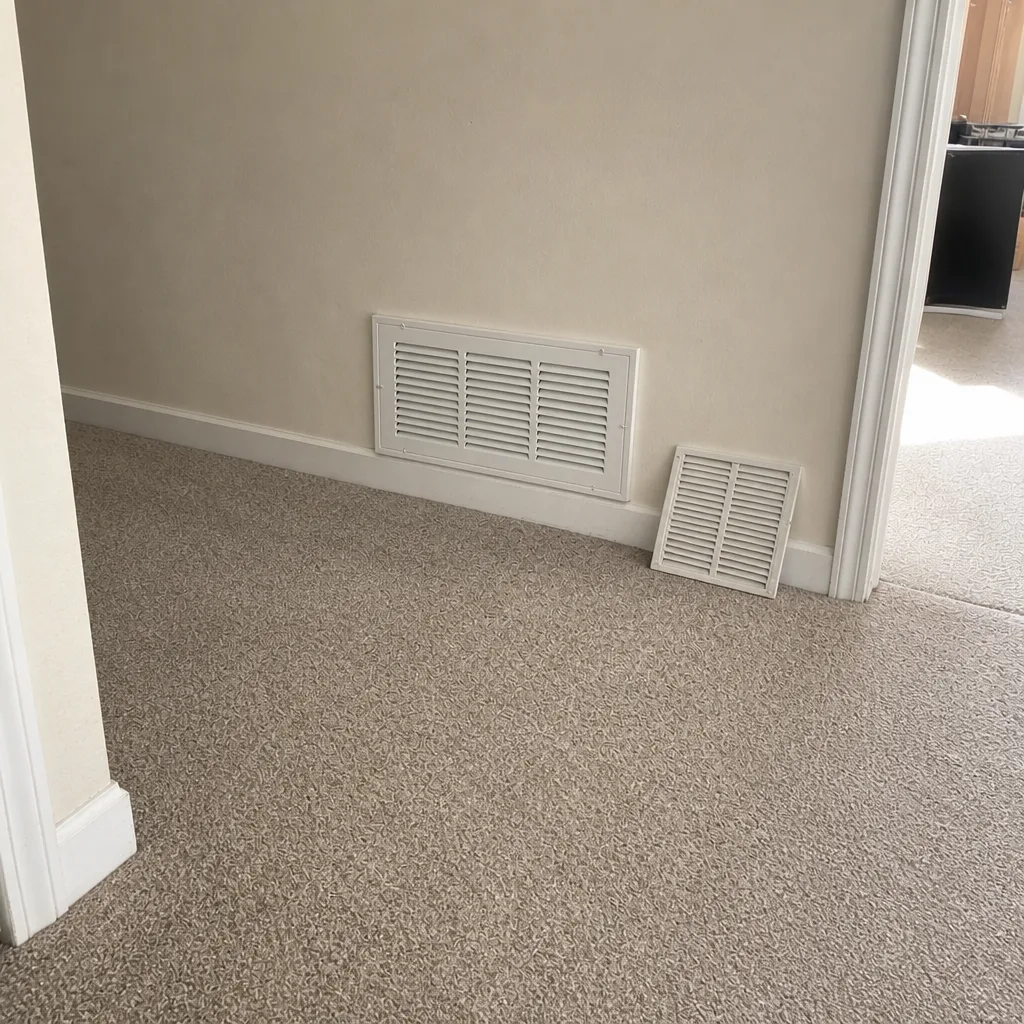 After
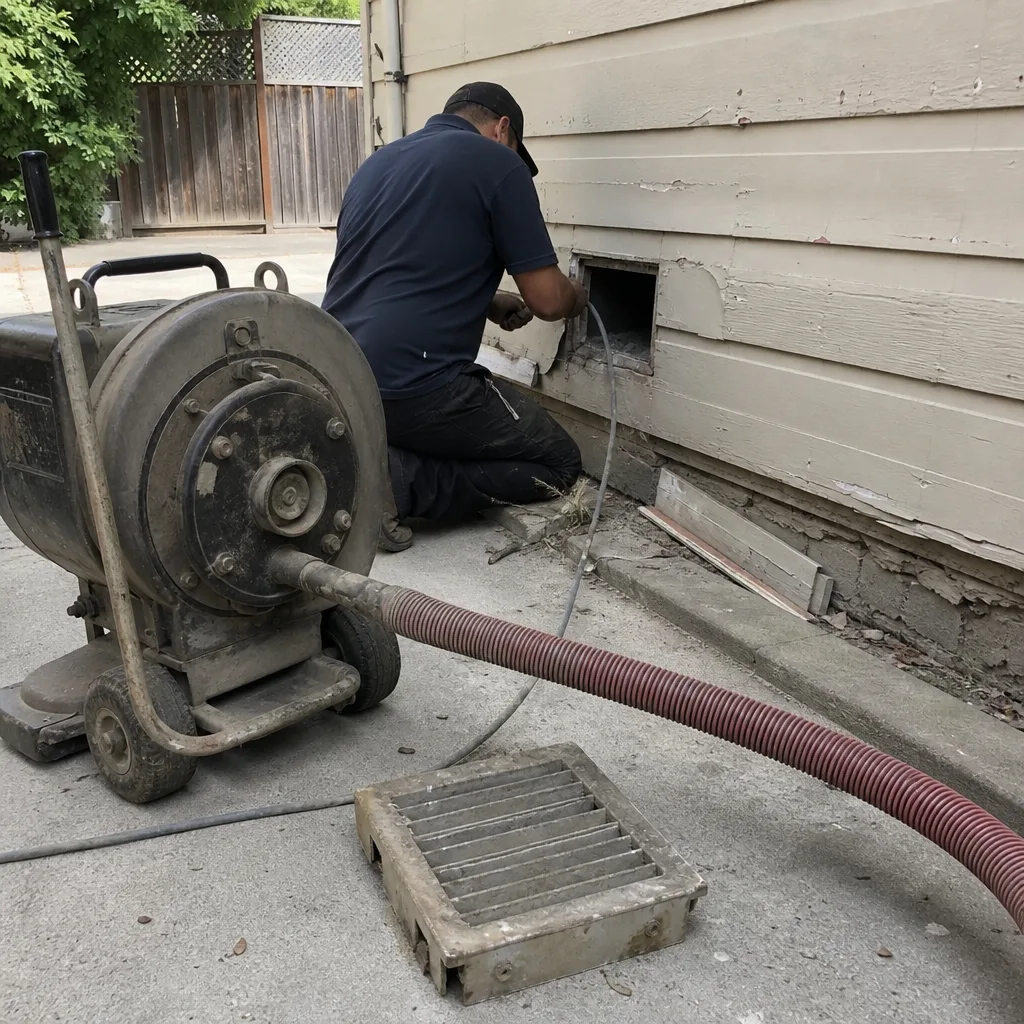 Before
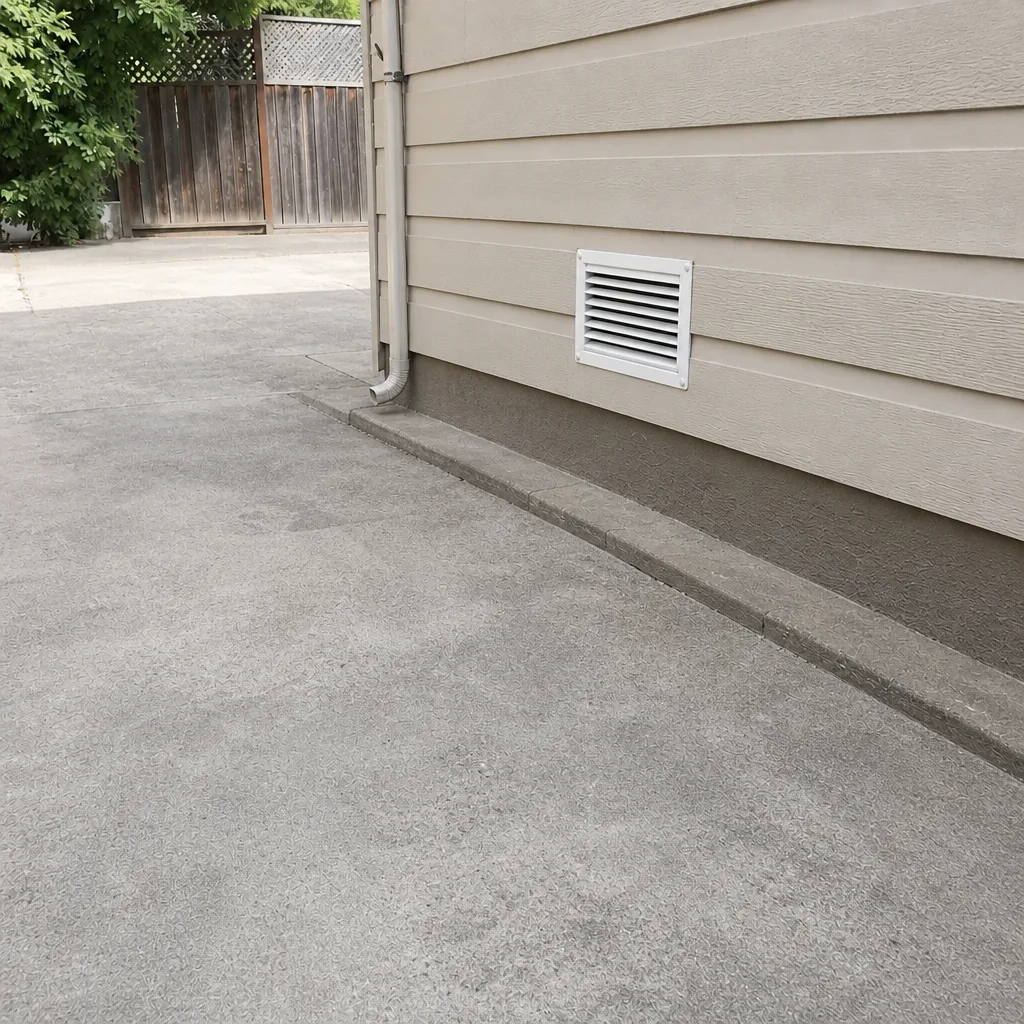 After
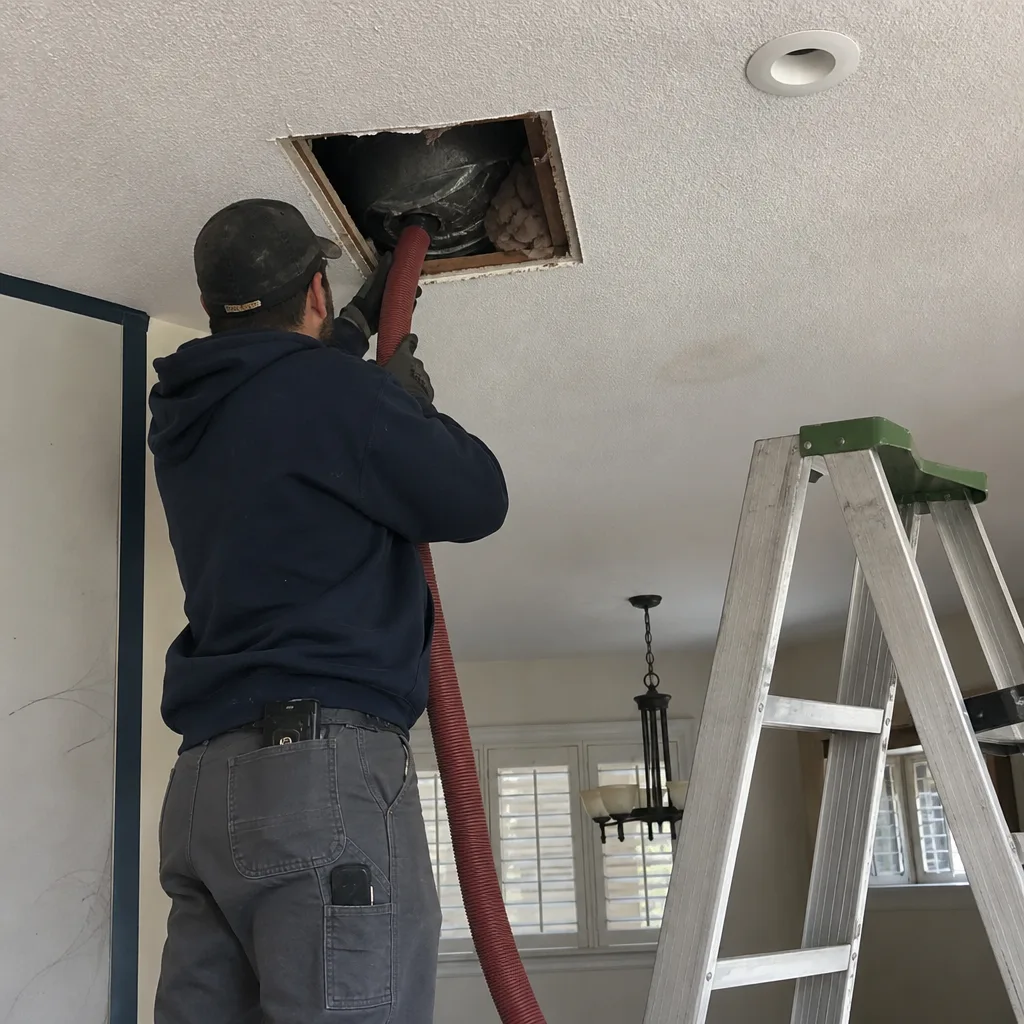 Before
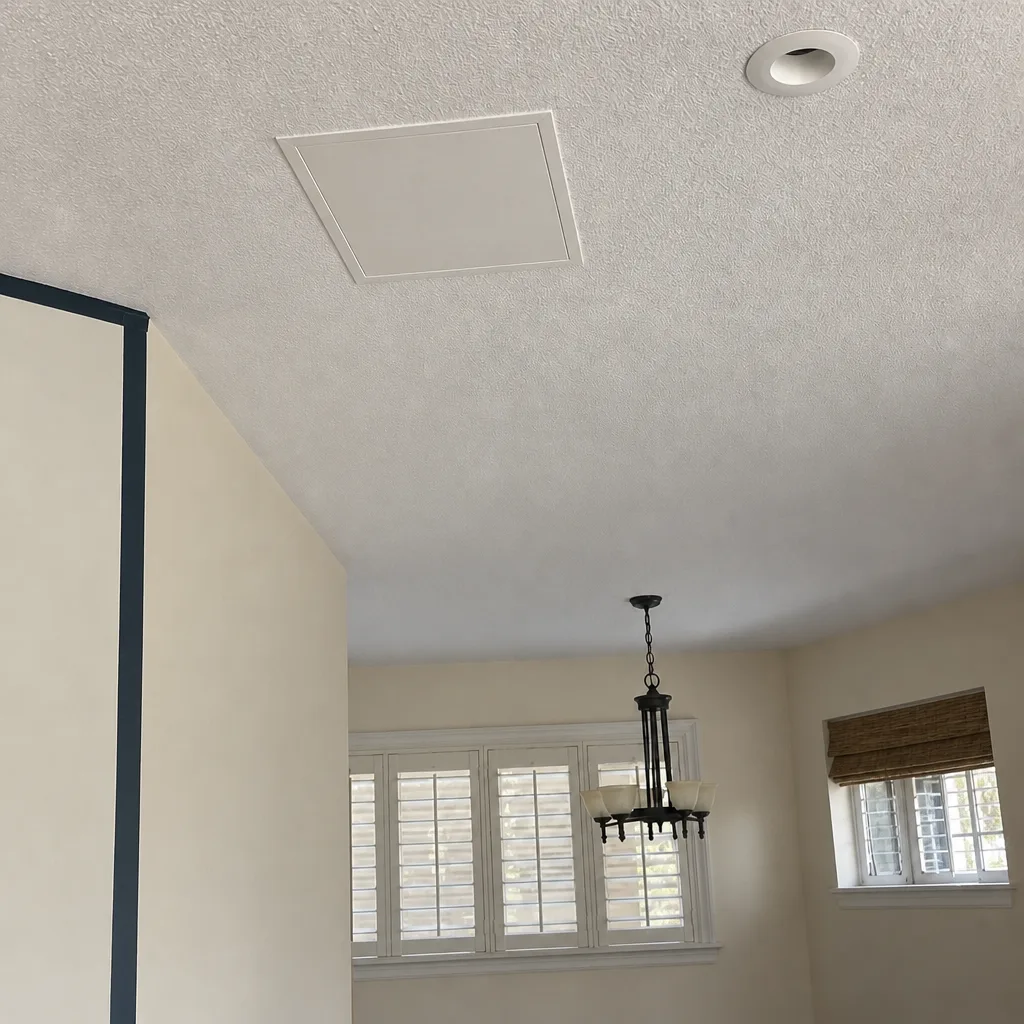 After
When to Call a Professional
Call a professional when you notice any of these specific signs: visible condensation on duct surfaces during fog season, a musty smell that gets stronger when the furnace or AC runs, dust that reappears within days of cleaning surfaces, uneven airflow between rooms that persists after filter changes, or visible mold-like staining inside any duct you can access. Any of those indicates a problem that won’t resolve with a filter swap or a weekend DIY pass. What it requires is an inspection with the right equipment, and often a repair rather than just a cleaning.
If you’re in Livermore and any of these sound familiar, Duct Cleaning Livermore offers free estimates – call (833) 593-6464. We answer 24/7. Fast dispatch from 7am to 7pm, Sunday through Friday. The estimate is free and the written estimate sets the final price, so there’s no guesswork when the crew arrives.
Frequently Asked Questions
Most Livermore homes need duct cleaning every 3 to 5 years, not annually. The exceptions are homes with significant wildfire smoke exposure, pets that shed heavily, recent construction or renovation, or residents with severe allergies – those may benefit from every 2 to 3 years. The seasonal checks around the cleaning (filters monthly in summer, visual checks in winter) matter more than the cleaning frequency itself. Call (833) 593-6464 for an honest assessment of your specific system rather than a schedule pulled from a national chart.
Air duct cleaning in Livermore typically runs by the job, not by the vent, and the price depends on the size of the system, the number of returns, the accessibility of the ductwork, and whether any repair work is needed alongside the cleaning. We provide a written estimate after an inspection, and that estimate is the price you pay – no per-vent pricing games, no surprise add-ons once the equipment is set up. Call (833) 593-6464 for a free estimate; the written estimate is the final number.
The cheap quotes usually come from vacuum-only operations that don’t contact-clean the duct walls, don’t contain the work area with negative-air equipment, and don’t inspect or repair anything. They price per vent as a teaser, then add fees once they’re on site. A Rotobrush contact-cleaning system physically scrubs the duct surface, and Nikro negative-air containment prevents dislodged debris from recirculating – both cost more in equipment and time, and both produce a measurably different result. The price reflects whether the job actually gets done or just gets vacuumed.
Demand before-and-after photos of the inside of the ducts. A competitive contact-cleaning job will show a visible difference: clean metal or plastic surfaces where there was previously a dust layer. If the company can’t or won’t provide photos, that’s a red flag. We photograph every access point before and after cleaning, so you can see the actual condition of the ducts, not just take our word for it.
Most residential filters catch only a fraction of the fine particulate in wildfire smoke, especially the fiberglass filters many homes use. The fine particles pass through the filter and deposit inside the duct system, particularly in the first several feet after the filter. Over repeated smoke events – which the Tri-Valley has experienced regularly in recent years – that layer builds up. That’s why post-smoke-season cleaning in late fall matters in Livermore more than in cities that don’t experience regional smoke.
Duct cleaning isn’t only about allergies. The same dust layer that irritates allergies also insulates the duct surface, slightly reducing heat transfer. It also absorbs moisture during Tule fog season, which is where musty odors come from. And it hides problems – a duct that’s packed with dust can hide a leaking joint or a compromised section that would otherwise be visible. Cleaning is a maintenance task that restores the system to a known baseline, whether or not anyone in the house has respiratory symptoms. Call (833) 593-6464 to talk through whether your system is due.
The Bottom Line
Livermore’s duct systems live through four distinct stress seasons: summer thermal expansion, fall wildfire smoke, winter Tule fog humidity, and spring pollen. Each one affects the ducts differently, and the maintenance schedule should follow those conditions rather than a generic national calendar. The highest-value actions are simple: check filters monthly in summer, clean after smoke events in late fall, watch for condensation during fog season, and do full-system cleaning in spring before the heat arrives. When you do clean, the method matters – contact cleaning that scrubs the duct walls beats vacuum-only suction, and containment equipment keeps dislodged debris out of your living space. If the inspection turns up leaks or damage, repair and cleaning should happen together, not as two separate projects from two separate companies.
If you’re in Livermore and want a straight answer about your duct system, call (833) 593-6464. We answer 24/7. Fast dispatch from 7am to 7pm, Sunday through Friday. The estimate is free.
Written by the team at Duct Cleaning Livermore, serving Livermore since 2015.